Monday, September 25, 2006

Powerful Fools....Jose Maria Aznar

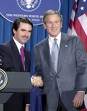
It was always predictable, I suppose, that Jose Maria Aznar would receive a South of Watford nomination as a Powerful Fool – it was really just a matter of time. On Thursday last week, the dear ex-leader decided to share with the world his statesmanlike wisdom on the crisis provoked by the Pope’s comments on Islam. In the process he reminded me that the formula Aznar + Foreign Affairs = Disaster still holds true over two years after he left office. In Aznar’s plain speaking view, there is no reason at all why the Pope should have to apologise to Muslims for causing any offence. Why? Because the Muslim world has STILL not got round to apologising for the occupation of Spain by the Moors, even though they have had over 500 years to do so! It turns out that the Visigoth kingdom which fell when the Moors launched their occupation was in reality the first Western nation to be attacked by Islam.


Not the only fool in town....

Personally I blame the Catholic Kings, Isabel and Fernando. They had every opportunity, when they finally retook Granada, to ask the Moors to say sorry – yet they didn’t do it. The Moors, to be fair, didn’t do their bit either. Following the lead set by airlines or other companies they could easily have made an announcement along the lines of “We would like to apologise for our recent invasion of the territory which at some point far in the future will be known as España. We deeply regret any inconvenience this unavoidable invasion has caused, and our service staff will be happy to help you with any questions you may have about it”. Then, when anybody was brave enough to ask any questions, they could have charged them extra for asking. Apart from showing no regrets, they also had no business sense, and clearly fell down on their communication skills. Lamentable.

Thursday, September 21, 2006

Meanwhile Back In The Cave....


As a follow up to the views of retired urban guerrilla Pio Moa on the use of political violence against the government, here is the opening paragraph of his latest masterpiece, attractively titled Alta Traición (High Treason):

El actual e ilegal gobierno de España, quinta columna del fundamentalismo musulmán ("alianza de civilizaciones") y del terrorismo separatista ("proceso de paz", estatutos anticonstitucionales, etc.), está echando abajo la Constitución, reviviendo los odios de la guerra civil y arrasando el sistema de convivencia democrática construido en la Transición.

My translation.

The current and illegal government of Spain, fifth column of muslim fundamentalism (“alliance of civilizations”) and of separatist terrorism (“peace process”, anti-constitutional autonomy statutes etc), is tearing down the constitution, reviving the hatred of the civil war, and laying waste the system of democratic coexistence constructed during the Transition.

Say what you like about our Pio, he doesn’t hold back on what he thinks.

Wednesday, September 20, 2006

Blogging....A Cautionary Tale

A bizarre, but entirely true, story on the perils of blogging. The tale begins in May last year when journalist Ignacio Escolar placed a link on his blog to some reports he had done from Mexico for Telecinco on the drug cartels. In the months following the placing of this piece on his blog, occasional comments were left on the post praising one gang or another. Nothing so extraordinary so far, but fast forward to May this year and the thread really began to take off, with hundreds of messages appearing during the summer months. These messages, apart from providing an invaluable introduction into the rich vocabulary of Mexican insults, were essentially a mixture of boasts and threats between what seemed to be supporters or members of different gangs. This torrent of comments on a year old thread attracted attention because of the exotic and surreal nature of the comments, but nobody assumed that there was anything more significant going on.


Last Saturday all of this changed. It seems that one of the comments left on the blog in the middle of August can be read as a warning that something was going to happen to a senior police officer in the state of Nueva Leon. 18 days after the publication of the comment this officer was shot dead in an area on the outskirts of Monterrey. Another comment left in July makes a reference to the decapitation of another person. Mexican newspapers picked up on these comments and began reporting that the blog was being used by killers employed by the cartels. El Universal, one of the most respected newspapers in Mexico, went so far as to describe Escolar’s blog as “supposedly” belonging to the Zetas, a gang linked to the Gulf cartel. The thread has now, not surprisingly, been closed to new comments after passing the 2000 mark. However, this morning I saw that similar messages are now appearing in the other threads describing what has happened, every blogger likes to get comments but this is going just a little bit too far.

March 11th....The Song Remains The Same

The combined effort by the Partido Popular (PP), the COPE radio station, and El Mundo newspaper to convert the investigation of the 11th March bombings into the main political issue of the autumn continued yesterday with the PP presenting a motion in Parliament on the subject. The motion was rejected by all other parties with representation, who jointly approved an amendment which was passed easily with only the PP voting against.

Given that the conspiracy theorists have been predicting ground shaking revelations on the subject for the whole summer, the results so far must be a little disappointing even for them. A combination of allegations of ETA involvement by one of the accused, who has changed his testimony several times already, and another person who has entered into a commercial arrangement to publish a book on his allegations, have failed to produce any serious evidence that the attack was not carried out by those accused. The latest El Mundo exclusive is to tell us that evidence has been found that “other people”, not members of the group accused of the bombings, were present at some point in the rented house where it is said the group carried out their preparations for the attack. Most people will look at a story like this, shrug their shoulders and move on to something else. But a good conspiracy theorist knows that this story can only mean one thing – these other people would have to be members of ETA! Any more innocent explanation is discarded, presumably on the grounds of being too boring.

One other result of the decision by ABC and El País to break their silence over El Mundo’s campaign has been to put the spotlight on what many see as the commercial side of the operation. The pressure on ABC that is coming from El Mundo, the COPE and Libertad Digital is seen as an open attempt by these media groups to try and grab the loyalty of at least part of ABC’s natural constituency, the most conservative sections of the Spanish newspaper reading public. Whether this is the prelude to the launching of a new combined right-wing media group is still unclear, but alignment with one side or the other inside the PP currently seems to match with those who are either for or against the promotion of the conspiracy theories.


Related Links:

The Right Divides
The Temperature Starts To Rise
El Mundo Goes Backpacking
El Mundo And Their Experts
Playing With Dynamite
Faulty Connections

Tuesday, September 19, 2006

Flying To The Rock

One result of the agreement reached yesterday between the Spanish and British governments is that it should become possible for me to fly between Madrid and Gibraltar without having to go via London. The first flights are due to begin in December, and the airport will eventually be used by both countries. Not that I have any real interest in making the journey, but it is a sign of changing attitudes on the question. For virtually the first time a Spanish government seems to be acknowledging that making life difficult for the inhabitants of Gibraltar is perhaps not the best way of convincing them that their future lies with Spain.

The Cost Of Living

It’s normal when you travel to another city to compare it with the one where you live, so I couldn’t resist some comparisons between Madrid and Berlin, where I spent the weekend. I used to think, when I still lived in the UK, that Germany was one of the most expensive countries in Europe to visit; but having worked quite a bit there in the last few years it is clear that this is no longer the case. Finding a place in Madrid where two people can eat and drink well for 30 Euros is not such an easy task any more (if you don’t go for a menu of the day), in Berlin it didn’t seem to be a problem. The gap between German and Spanish prices has largely disappeared in the last decade for many things. In some cases it has gone the other way, I read recently that an apartment measuring 100 square metres in the centre of Berlin can cost around 150000 Euros. You have to at least double that figure to get the price of something similar in Madrid. So what, this could just be a sign that Spain has become wealthier and that Germany is no longer the economic powerhouse that it used to be? However, the crucial comparison comes when you compare the average salary in the two countries. I don’t have the figures to hand, but I’m prepared to bet a big glass of foaming weizen beer that the German salary is still well ahead of its Spanish equivalent.

Friday, September 15, 2006

Destination Venus

Well not really, it's Berlin this weekend. The title is a homage to the Rezillos, who played in Madrid last night.


I love my baby cos she does good sculptures....

Thursday, September 14, 2006

March 11th....The Right Divides

"Una derecha que entregue al 11-M el protagonismo de su oposición al PSOE está abocada al fracaso electoral, pero también al fracaso ideológico, porque las convicciones democráticas no son compatibles con actitudes propias de extremistas antisistema."

My translation:

"A right which gives the 11th March the lead role in its opposition to the PSOE is destined for electoral failure, and also for ideological failure; because democratic convictions are not compatible with attitudes more suited to anti-system extremists"

Not my words, it's part of the editorial today from ABC, bastion of Spanish conservatism. Without further comment.


Related Links:

It's Not Too Late To Remember

Something else I picked up from the press at the weekend, it seems that the recent debate and projected legislation concerning the Civil War and its victims has provoked a curious side-effect. I had noticed a couple of times in the last few weeks that there were death notices in my newspaper referring to people who died in the Civil War, usually they are dedicated to people who have died much more recently. It appears that this publication of notices remembering those who died in the war has become a small trend, and that the notices are appearing for those that died on both sides – the side they supported is normally indicated by the newspaper in which the death notice appears (ABC and El Mundo for those on the fascist side, El País for the republicans).

Wednesday, September 13, 2006

March 11th....The Temperature Starts To Rise


We can expect an interesting day on issues affecting the Madrid train bombings. After weeks of new “revelations” from El Mundo, the other major newspapers in Spain have today finally joined the fray. El País has today printed a substantial article on the conspiracy theories promoted by El Mundo and their friends, and their report has been echoed by ABC, traditionally the most conservative of the major newspapers here.

Last week El Mundo printed an interview with José Emilio Suárez Trashorras, the man accused of stealing and selling the stolen explosive that was used in the bombings. Whilst respecting the presumption of innocence, it has to be said that the paper went completely overboard in their attempts to portray Trashorras as an innocent choirboy victim of the evil machinations behind the bombings. Trashorras, in turn, delivered his side of the bargain by duly pointing the finger at a combination of ETA and members of the security forces, although without producing any concrete evidence of their involvement. El Mundo has followed up this week with the serialisation of a book about another person involved with those accused of the explosives theft, the book has been written by Fernando Múgica who works for, wait for it…..El Mundo.

Well today El País has responded with the transcript of a conversation between Trashorras and his parents, recorded in prison. In the report, Trashorras is quoted as saying “While the newspaper El Mundo pays, if I am outside, I will tell them the story of the Spanish Civil War”. Clearly the transcript has been leaked to the paper as part of an attempt to strike back at El Mundo. One effect of this is to put the spotlight on the question of whether El Mundo’s involvement in the case has reached the stage where they are making financial deals with people involved in the bombings. The publication of the book certainly suggests that to be the case, but if it turns out that Trashorras has received any money from them then that would be much more serious.

All of this on the day that the Partido Popular are going to raise El Mundo’s conspiracy accusations in Parliament. The outside temperature might be falling, but it doesn’t feel cold.

Related Links:
El Mundo And Their Experts
Playing With Dynamite
Faulty Connections

Tuesday, September 12, 2006

Is This The Worst Newspaper In Spain?

World exclusive by Phil Space.

One person, a member of the youth wing of the Catalan Socialists, wears a T-shirt supporting Pepe Rubianes at a ceremony marking the Diada, Cataluña’s national day. From this, El Mundo fills almost the whole of its front page with the headline:

“El Socialismo Catalán se identifica con el actor que insultó a España”

“Catalan Socialism identifies itself with the actor who insulted Spain”

Who needs Rupert Murdoch when we already have Pedro J Ramirez?

Monday, September 11, 2006

September 11th Postscript

One post today about a Chilean film, set in the Pinochet dictatorship, and another about the effects of September 11th 2001. It's as good an excuse as any to remember September 11th 1973, date of the military coup in Chile; and to remember those whose place of death is still not known.

Did 9-11 Produce A Different Spain?


In amongst all the usual acres of newsprint that get produced every year on the anniversary of September 11th 2001, I noticed an interesting piece by Santos Juliá in yesterday's El País about the effect which the event and its aftermath has had on Spanish politics.

In this blog I have been writing quite frequently about this new Spanish right that has emerged ,embracing the "war on terror", supporting Israel in its military adventures, and generally adopting what we can (slightly lazily) call the neocon agenda. Juliá makes the point that this switch is largely a result of 9-11 and the decision by Jose Maria Aznar to align Spanish foreign policy with that of the Bush administration.


What are they so happy about?


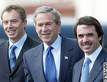
So what would have happened if 9-11 hadn't happened? The conclusion is that Aznar would not have been photographed with Blair and Bush in the Azores, smiling idiotically as war was declared. The Iraq war might still have happened, I have never bought the argument that it had any relationship to 9-11; but Aznar might not have felt the temptation to involve his country against the will of the vast majority. The Madrid train bombings, or something similar, could still possibly have happened, but with no Iraq involvement perhaps Aznar and his party would not have felt the need to try and manipulate the situation to their own advantage and as a result could even have remained in power?

All speculative stuff, but the impact on our lives is undoubtedly significant, last year I came across a couple of Guardian Weeklies from 2000 that I hadn't had time to read when they arrived. I flicked through them, and was struck by how different everything seemed in 2000; not least because the world, for all its problems, seemed to be a lot safer than it does 5 years after 9-11.

Cinema....Mi Mejor Enemigo

I went to see this film by Chilean director Alex Bowen Carranza without very high expectations and have to say that I enjoyed it much more than I expected. Having worked for a while in Chile a few years ago, I recall a dinner conversation one night when some of those present were talking about how close Chile and Argentina were to going to war in 1978 over a border dispute. The two countries at the time were both controlled by military dictatorships at the height of their powers.

The film tells the story of a Chilean army patrol, consisting mostly of conscripts, sent out to control a remote point on the frontier between the two countries. The patrol gets lost in the flat featureless Patagonian wilderness and can no longer even be sure whether they are in Chile or in Argentina, with nothing visible to mark the frontier. Ordered to maintain a position, they dig trenches and wait for further orders. Then one day they find themselves with an Argentinian patrol for neighbours, who have dug their own trenches a short distance away.

With no war yet declared each patrol has to get used to the presence of the other in a zone where there is nothing else to be seen. Slowly they begin to fraternise as the solitude of their surroundings and the absurdity of their situation begin to tell. Human relationships get the better of the requirements of military discipline with its associated need to have an enemy to hate. The film works well in showing the futility of a conflict over a frontier that is not even properly defined, and which means nothing to anyone who passes through the area. It doesn't go much beyond that, not entering into more political territory concerning the nature or actions of the regimes in both countries. It doesn't have the oppressive and slightly depressing atmosphere of Iluminados por el Fuego, a film with a similar theme about the Argentinian conscripts who were sent to defend the Falklands/Malvinas from the British. However, in that film the war actually took place, and the conditions portrayed are necessarily much more miserable.

It is not a film that will have very wide distribution, only two cinemas in Madrid seem to be showing it at the moment, but I recommend it to anyone who gets the chance to see it.

Friday, September 08, 2006

Stagefright

I know, really, I write too many pieces about the crazy antics of the Spanish right! I'm trying to stop but the problem is the stories keep on coming, I don't know what to do. The actor Pepe Rubianes yesterday found that he could no longer present the work "Lorca eran todos" about Federico García Lorca, in the Teatro Español in Madrid. The theatre belongs to the municipality, ultimately controlled by the mayor Albert Ruiz Gallardón, who is becoming something of a regular on this blog.


The story begins in January this year when Rubianes appeared on Catalan TV and made some, frankly, not very polite remarks about the Spanish and the Extremadurans in particular. He sort of apologised afterwards and said that he was talking about the backward reactionary side of Spanish society. Once news emerged that he was going to be presenting the show in Madrid, in a municipal theatre, the right wing blogs started suggesting he shouldn't be allowed to make use of public theatres and there were rumours of people organising demonstrations. So yesterday the show was cancelled, initially the blame was placed on Gallardón, then later it was said that Rubianes himself had taken the decision. Finally, today, Rubianes has stated that it was the mayor who had given in to right-wing pressure and withdrawn the show. Ironic, of course, that it was a work about Lorca, himself executed by the political ancestors of the imbeciles who forced the cancellation.

This is the third time in recent years that there have been right-wing protests over theatrical works in Madrid. The theatre where Italian comedy actor Leo Bassi presented his last work was the object of a failed firebombing and had far right demonstrations outside the theatre. A couple of years ago a play called "Me Cago en Dios" (I shit on God) - ironically written by the brother in law of right-wing regional president Esperanza Aguirre - was also attacked, the playwright and lead actor were beaten up in the theatre. I went the following night, unaware of what had happened, and thought the security was a little bit tight for a minor play in a small theatre. Later I found out why.

Watch out you Catalan bloggers, if it carries on like this I'm coming to Barcelona to join you. Ok, thats it, have a good weekend and next week I'll try and write about something different.

Weigh Anchor!


Predictably the Spanish parliament gave approval yesterday for Spanish troops to participate in the UN force in Lebanon. Perhaps equally predictably, the opposition Partido Popular (PP) did its best to link the mission to the war in Iraq as a means of suggesting that the Spanish government has been hypocritical on the issue of sending troops abroad. PP leader Mariano Rajoy won the stating the obvious award for this week by suggesting that the Spanish troops were not going on a "peaceful country excursion". Thanks Mariano. The mission is of course dangerous, the Spanish troops look destined for the corner where Syria, Lebanon and Israel meet. Anyway, the PP talked as if they were against the mission......and then voted in favour.

Wanted….Presentable Candidate, Political Heavyweight Preferred


Who will the Spanish Socialist Party choose as their candidate for the mayoral elections in Madrid next year? It’s an open question in the city of eternal trenches after the announcement yesterday that the candidate last time round, Trinidad Jiménez, is to join the government. La Trini has been given a completely new post in the foreign affairs ministry, with responsibility for “Iberoamerica” – which sounds like an airline. Anyway, lots of nice trips to interesting places in South America are guaranteed, I could do that.

The reason for moving Jiménez is because Prime Minister Zapatero wants to put up a well known candidate against incumbent mayor Alberto Ruiz Gallardón, in an attempt to snatch one of the biggest political prizes in the country. Strong rumours have circulated about that candidate being Javier Solana, “Mr Foreign Affairs” for the European Union – although other names mentioned have included former defence minister José Bono and even Felipe González.

It would be strange if Zapatero made his move yesterday without knowing who the candidate would be, but there is still no official announcement. Solana is a veteran politician and very well known, but it’s not clear that he wants to do this. The arrogant self-regarding Bono would be insufferable as mayor of Madrid, I think I would almost prefer Gallardón; I find it hard to believe that González would be a candidate, he is certainly a heavyweight and always had electoral appeal, but it seems inconceivable that he would return now to active politics. Madrid is probably too small a stage for someone who was Prime Minister for 14 years.

Along with the European elections, this is an election that I can actually vote in as an EU citizen – I am really making a big effort to conceal my excitement. One thing that is certain, should I vote at all, is that the candidate I support will not become mayor of Madrid.

Thursday, September 07, 2006

A Call To Arms

Here we have another example of the over excitability that the recent hot weather is provoking in right wing circles in Spain. Pio Moa was at one time a member of the revolutionary terrorist organisation GRAPO. However, in recent years he has moved, how shall I put it, a tiny bit to the right in his political views and has become well known as a revisionist historian with his claims that Franco’s uprising against the elected Spanish government was justified.

It seems that this shift in political allegiances has not affected his taste for political violence, perhaps not too surprising in an apologist for Franco. In a column published this week on the right wing website Libertad Digital, Pio laments the possibility that the Partido Popular (PP) might not be capable of winning the next election, and offers us the following possibility to think over (my translation):

"Use violence, then? When the government breaks the rules of the game, when it not only legalizes murder as a way of making politics, but rewards it by offering the murderers the liquidation of the constitution and the rule of law; obviously this opens the way to violence and deprives it of the moral authority to condemn the use of violence against it. "

It would be reassuring to be able to suggest that this sort of thinking comes from the wackier fringes of the right, but the people around Libertad Digital are the ones currently setting the agenda in the PP.

Link via escolar.net

Tuesday, September 05, 2006

Madrid Burns


Madrid has been a bit too hot for the last few days, but it shouldn’t be so hot that buildings burst into flames. Last night a new office block that is projected to be the tallest in the city was on fire for several hours; illuminating the nearby celebrations of the Spanish basketball team, newly crowned world champions. The building is being constructed on the site of what used to be Real Madrid’s training ground, that is until the city administration decided to give the club a very succulent gift by reclassifying the valuable site as suitable for construction. The operation wiped out Real Madrid’s massive debt at the beginning of the Florentino Perez era, allowing them to embark on their expensive purchase of some of the world’s best known players – money down the drain as it turned out. Not surprisingly, given the heavy presence around the club of those who make their money from construction, the building that was partially burnt last night belongs to one of the (losing) candidates who stood in the elections to replace Perez as club president.

Monday, September 04, 2006

March 11th....El Mundo Goes Backpacking


There was a certain amount of expectation as we entered September – what story would the newspaper El Mundo choose to lead the charge once again on the issue of the Madrid train bombings in 2004, and the allegation that there is a hidden conspiracy behind the attack? Expectation was highest amongst the Peones Negros (Black Pawns), the sect-like movement that has been created to propagate this absurd campaign. The high priest of this sect is Luis Del Pino, who has been at the forefront of promoting conspiracy theories about the bombings and who formulated the phrase “the socialisation of doubt” to summarise the objectives of the campaign. The Peones Negros had been predicting for weeks that September was going to be a hot month – we are not talking here about weather forecasts – and that El Mundo could be about to deliver a fatal blow to the case against those accused.


So last Friday, the 1st September, duly arrived and there was a front page story in El Mundo about the “Vallecas bag”, the rucksack containing an unexploded bomb which was recovered from one of the trains. This bag is a key piece of evidence in the case being presented for trial, after all it contained the telephones (used as timers in the bombs) that led to the first arrests, and of course was packed with the Goma-2 ECO explosive which the accused are alleged to have used in all the bombs that did explode. It is not the only key piece of evidence but has been the focus of all attempts by the conspiracy theorists to suggest that the bombings were not really carried out by Islamist terrorists. It is called the “Vallecas bag” after the police station in this area of Madrid where it was eventually discovered the night after the bombings. The bag had been removed from the trains along with all other personal effects that were recovered in the aftermath of the explosions.

Friday’s story was based around a police report on an unidentified DNA profile that had been detected on the Vallecas bag. Clearly, the lack of identification of the profile means that the police are unable to say how this person came into contact with the bag. In a speculative attempt to offer a solution the report suggested that the bag “could” have been “manipulated” before it was discovered to be a bomb, and having been transported with other personal effects recovered from the trains to the IFEMA exhibition hall which was being used as an emergency centre following the bombings. The quoted words are the most important thing here, the conspiracy theorists have been keen to show that the bag was not under constant vigilance, and of course what they really try to suggest is that it was planted by persons unknown involved in the conspiracy. The use of the word “manipulated” in the report can of course just be a reference to someone having touched or lifted the bag, but manipulation can also have a sufficiently sinister interpretation to make any conspiracy theorist get excited. As with other El Mundo stories on the subject (see the links at the end), the reader is invited to make connections that are not actually supported by any evidence:

- no evidence of any kind is provided to show that anyone at all touched this bag in IFEMA.
- no evidence is provided that the chain of custody of the bag was ever breached.
- not even the tiniest scrap of evidence exists to show that the Vallecas bag is a planted fake.


The Peones Negros, however, are driven by faith rather than reason. They got the message that El Mundo wanted to transmit and soon the message was out on Internet that the Vallecas bag had been manipulated and was therefore no longer valid as evidence in the case. For Del Pino and his followers it is always the other side that has to prove things, they see no obligation to provide evidence for anything that they allege. In true sect fashion, they have discussions on their blogs about how to spread the word, and recruit new followers. The peones are told how to introduce the topic into casual conversations at work or when with friends. They are now starting to speculate on these blogs with ill-concealed relish about the political instability that could potentially follow a collapse of the trial, and how it will be revealed that the alliance between ETA and the governing Socialist Party was behind the bombings. El Mundo itself has now more or less openly declared that the bombings were a coup d’etat organised to achieve a change of government. They are now very close to the line where they will have to put forward names for this vast conspiracy that is being alleged, the stakes are getting ever higher.

This is not a situation where a newspaper reveals the results of an investigation as they emerge; rather it is a calculated drip-feed of stories aiming to bring down the case against those accused, and time is running out. Anyone with a little bit of knowledge about the bombings and the subsequent investigation can find flaws with these stories on a single reading, the deliberate mixing of fact and speculation together with the open invitation to draw conclusions not supported by any of the evidence provided in the article means that the stories do not stand up. It is extraordinary that the second largest newspaper in the country should lend itself to what is nothing more than a campaign for political revenge – in the process trampling the memory of all those who died in the most serious terrorist attack that Spain has ever known. The lack of any sort of democratic ethic on the right-wing of Spanish politics has probably not been so evident since the death of Franco over 30 years ago. The links listed below deal with just some of the other stories that El Mundo has printed in its attempts to promote the conspiracy theories about the bombings. For any student of journalism who seeks a demonstration of the difference between genuine, honest investigative reporting, and the politically motivated manipulation of data, El Mundo has provided the most perfect example imaginable – of the latter.

Related Links:

El Mundo And Their Experts
Playing With Dynamite
Faulty Connections

Friday, September 01, 2006

If You Can't Stand The Heat

Summer is over, not officially of course, but really the 1st September in Spain marks the end of the holiday season. It’s as hot now in Madrid as it was in the middle of July, and it hasn’t rained in weeks, so there is no feeling that the season is about to change. The best thing to do in these circumstances is to get out of the city during the hottest part of the day; last weekend I did a walking route that is just perfect for this weather and I pass it on as a recommendation for anyone in a position to do it.

We spent Friday night in the small village of La Granja, near Segovia, so we could set out first thing on Saturday morning heading towards the Puerto de Navacerrada. The route follows the river Eresma through pine forests passing the village of Valsain and the popular picnic spot called the Boca del Asno. Most of this route is very gentle walking as the path ascends very slowly until you reach the slopes of the Sierra de Guadarrama. Even the last part is not too testing for the reasonably fit, although overall there is an ascent of about 700 metres over a distance of 17 kilometres. From the puerto it is possible to get back to Madrid either by bus or in train via Cercedilla. The key thing about this route is that almost all of it is walked in the shade of the woods, so even on a hot day you never suffer the full effects of the sun.

Some photos can be found here:

FotoSierra.com

I have this route in GPS and Google Earth formats – available on demand.

Thursday, August 31, 2006

The Fleet Prepares


Last week I wrote about the possibility of Spain participating in the UN peacekeeping force in Lebanon. It now seems likely that up to 1000 Spanish troops could be on their way to participate in this force. The Spanish navy is already making preparations to leave as soon as the Parliament gives its
approval to the operation, the vote should be on the 7th September.

By this time we should finally see what the attitude of the Partido Popular is going to be, there are reported to be strong pressures from those close to Jose Maria Aznar to vote against sending the force. Naturally, those who supported the invasion of Iraq find it hard to stomach the idea of a UN sponsored peacekeeping force. I suspect they will not vote against sending the troops, but they will still be out to take any opportunity this risky operation provides to cause damage to the government.

Wednesday, August 30, 2006

Immigration Makes Waves


In May I wrote about the attempts by African immigrants to reach the Canary Islands by boat from West Africa, and despite all the efforts of the Spanish government to close the exit points the flow of immigrants arriving in the islands has not significantly changed during the summer. One of the images of the holiday period has been that of sunbathing tourists coming to the assistance of exhausted immigrants as they finally make it to dry land.

The issue is also provoking political dispute on the mainland, regions which are controlled politically by the Partido Popular have been complaining that they are receiving the majority of those immigrants that are flown from the islands to the peninsula. Those immigrants who cannot be returned home because no repatriation agreement exists with their country of origin, are served with an expulsion order which cannot be enforced and taken to the mainland in an attempt to reduce the pressure of so many new arrivals in the Canary Islands. They then exist in a kind of limbo as they do not have papers which permit them to work legally.

When I read the news of these protests I felt sure that I could remember that when the Partido Popular (PP) was in power they were also flying the vast majority of these immigrants to areas such as Madrid, Valencia, or Murcia that already contained high immigrant populations. Well now I have found an article on the web confirming this and, interesting detail, it seems that the pioneer of this policy was none other than Mariano Rajoy when he was the interior minister; he is of course now the leader of the opposition PP. I assumed at the time that the PP did this because they knew that many of these immigrants would end up working illegally in these areas. Anyway, if the leaders of these regions want to complain about the policy they now have a much easier option than before, they can pick up the phone and complain directly to the leader of their own political party.

Thanks to El rey de la baraja for the link.

Tuesday, August 29, 2006

The Loneliness Of The Long Distance Runner


Alberto Ruiz Gallardón, the mayor of Madrid for the Partido Popular (PP), is an ambitious man. Not content with converting the Spanish capital into one of the world’s largest construction sites, Alberto has never made any secret of the scope of his ambition; he would really like to be Prime Minister. However, it is one thing to have the necessary ambition, and another to have a means of realizing that ambition. You would think that having presided both the city administration, and previously the regional government for Madrid, would be more than enough to set anyone on course for greater things.

Unfortunately for him, Alberto has one major obstacle in his path and that happens to be the political party he belongs to, the PP. After having carefully cultivated during years a presentable centrist image, socially liberal, Alberto now finds himself dramatically out of step with a party that is moving further to the right in its thirst for revenge for the electoral defeat in 2004. Gallardón has been very successful with the electorate in Madrid, but is roundly detested by the right wing hard core of his own party. Since the PP lost power his internal situation has worsened, he committed an unpardonable “crime” for many in the PP by suggesting that perhaps the PP should engage in some internal reflection on possible mistakes they had made which may have provoked their electoral defeat. Then he promoted an alternative candidate to preside the regional party organization in Madrid, an act that provoked a tremendous reaction in a party where internal democracy is not approved of; candidates for important posts almost always being chosen by the party leadership rather than the membership. More recently he carried out in person the civil wedding of two gay PP supporters, the PP has been completely against the reform which permitted gay marriage and this marked even more the difference between some of his positions and those of the party’s leaders.

Despite his differences, on the surface things are not going too badly for Alberto. It has been reported in the last few days that his will be the second name on the PP list for Madrid at the next general election, immediately behind that of the party leader Mariano Rajoy. Barring complete electoral catastrophe, this guarantees that Gallardón will be a member of parliament for the PP after the next election. In theory this takes him another step closer to achieving his ambitions, but the widespread antipathy towards him amongst many members and senior leaders of the PP means that the road to power will not be smooth. The situation of the PP at the moment reminds me very strongly of the Conservative Party in Britain after Mrs Thatcher was forced to resign. An embittered ex-leader, in this case Jose Maria Aznar, continues to dominate the direction of the party even when no longer officially occupying a position of responsibility. The Conservatives in Britain swung further to the right after losing power, as the Thatcherite wing of the party was unable to comprehend that they no longer had the sympathy of the electorate. A similar thing has happened to the PP, with Aznar’s appointees controlling the party machinery, and refusing even the slightest suggestion that they should moderate their all-out onslaught against a government they are unable to accept as legitimate.

Because of this strengthening of the right wing in the PP, Alberto’s prospects for reaching the leadership quickly are not looking good. Even if Rajoy were to lose the next general election and resign, something which is currently looking quite possible, the continuing dominance of Aznar and his supporters coupled with the absence of internal democracy in the party would almost certainly mean the replacement of Rajoy with another hard right candidate. If the PP wins the election, then again the path to the leadership would be blocked, probably for several years. In the end Gallardón’s best bet is for the PP to go down to a couple of resounding electoral defeats, which would force a renovation of the leadership as well as giving the membership something to think about. Just as the Conservatives in Britain needed three electoral defeats and several leaders before choosing a more centrist leader, so the PP in Spain seems to be going through a similar process. Alberto will have to play a long game and be very, very patient

Monday, August 28, 2006

Cinema....El Próximo Oriente

El Próximo Oriente, the latest film by Spanish director Fernando Colomo, is set in the Madrid barrio of Lavapiés. This area has in recent years become the entry point in Madrid for immigrants from all over the world, and the film reflects this new diversity.

For me the film is marred from the beginning by the unlikely plot, in which our timid hero Caín (played by Javier Cifrián) offers to marry the daughter of his Bangladeshi neighbours (Nur Al Levi), who his philandering brother (not surprisingly named Abel – played by Asier Etxeandia) has left pregnant. He converts to Islam in order to gain the acceptance of the family, and passes himself off as the father of his wife’s unborn child, in the process being adopted as part of his new family.

Leaving his job in a butcher’s shop, Caín sets about the renovation of the family restaurant which leads us into the part of the film where the clash of cultures becomes most apparent. Anyone who has seen the British film East is East will be familiar with some of the issues raised in this film, notably the difficulties of a traditionalist immigrant father having to come to terms with the fact that his children are growing up in a society very different from that which he left behind.

This film does not work for me as well as East is East, apart from my doubts over the plot the setting is a bit too artificial, and too often the film opts for the most predictable of outcomes. However, Colomo is not a director who seeks to make grand statements about social issues in his films, in reality this is a comedy-drama which does little to provoke too much thought about the background against which it is set. Despite this, it reflects new realities and a film like this would have been almost unthinkable as little as 10 years ago, a sign of just how quickly Spain has become home to immigrants from Asia, Africa and South America. It’s a watchable film, and has some enjoyable moments, but it never really takes off.

Friday, August 25, 2006

Riding Into The Sunset


We have one less statue of General Franco on display in Spain after the dead dictator’s effigy was removed from the military academy in Zaragoza yesterday. Following the removal of the statue outside the defence ministry in Madrid last year, it seems that there is at last slow but steady progress on getting rid of these unloved reminders of the past.

Predictably, the right wing here is against the statues being removed, on the grounds that they are part of the “historic memory” of the country. Naturally, they don’t show similar interest in other historical memories of the period, notably the remains of thousands of people who are still buried in unmarked graves. Neither do they show interest in restoring the statues of Stalin in Eastern Europe, or Saddam Hussein in Baghdad.

Now it’s Santander’s turn, the only city in Spain that still has a statue of Franco in a public square.

Who Can Stop Barça?

After my uncannily accurate prediction of Spain’s fate in the World Cup, and with the new season just about to start here, it seems like a good moment to assess the possibilities of a team that is not called Barcelona winning the competition this time around. However, the reality is that Phil Ball over at Soccernet has already done a far more expert and comprehensive analysis than I could hope to do of the contenders for the title.

Much of the attention this season will be on the renovated Real Madrid, with a new president, a new (old) coach in Fabio Capello and several new players. Capello has a sort of legendary status in Madrid, despite having only spent one season previously at the club, and it is going to be interesting to see whether he can deliver on the very high expectations his long awaited return will have created. Already there are significant changes from the way in which the club was run under Florentino Perez, it looks as if Capello even has some say in who the club is buying! The money spent so far has been more focused on the midfield and defence; although it looks as if Van Nistelrooy has been brought in to replace Ronaldo up front, assuming the negotiations with one of the two Milan clubs come to something and the chubby one leaves. Ronaldo, despite being a shadow of the player he once was, has been the main goal scorer for Madrid in the last few seasons. If he goes, then Van Nistelrooy will need to maintain an impressive strike rate, especially if Raúl continues to disappoint. Expect a more defensive Madrid, personally I don’t think they’ve got the team yet to out perform Barcelona.

The other possible contenders are Valencia, Atletico Madrid, and possibly Sevilla. Atletico almost always disappoint, but they have a good coach this year having captured Aguirre from Osasuna, and have been investing in the team; so their long suffering supporters may at last have something to cheer. I might even try and get down to the Vicente Calderon myself this season, always a much more authentic footballing experience than going to the Bernabeu.

Valencia are looking good, they have Morientes and Villa to provide the goals, and yesterday splashed out to buy Joaquin from Betis – although I always see Joaquin as being one of these players who runs faster than he can think, so too often he ends up lost on his own by the corner flag. Potentially Valencia could be the main contender ahead of Madrid. Sevilla finished very impressively last season, although to be fair they only had Middlesborough to stop them lifting the UEFA Cup; they probably don’t have the in-depth strength to mount a real challenge.

So, unless they lose interest, or get too obsessed with the Champions League, it should be Barcelona again. The hope for the neutrals has to be that at least one other manages to make a contest out of it.

Thursday, August 24, 2006

Spanish Troops For Lebanon?

As discussions take place on the composition of the peacekeeping force for Lebanon, it seems fairly likely that a contingent of Spanish troops will be included in this force. Should that turn out to be the case it will add another risky mission to the one which Spain already undertakes in Afghanistan

The reactions to the Israeli invasion of Lebanon have revealed further evidence of the shift that has taken place in right wing politics here in Spain. Before Jose Maria Aznar decided that he wanted to be involved in the Iraqi adventure, there was never really much interest shown by the right in foreign affairs, and in general they were fairly even handed on the question of the Middle East and the Israeli-Palestinian conflict. Since Iraq, and since losing power, all of this seems to have changed and the full neo-conservative “war on terror” agenda appears to have been adopted, at least by sections of the right here. When Spanish Prime Minister Zapatero expressed (fairly timid) doubts about the wisdom and proportion of the Israeli attack, he was accused by the Partido Popular of being an anti-semite, an accusation which I don’t think has ever formed part of the political debate here – at least not since the 15th century when the Jews were expelled from Spain.

Meanwhile, in the deepest recesses of the cave where the more resentful sections of the right have spent the last couple of years scratching the damp walls with their mammoth bones, there are even darker mutterings involving the situation in Lebanon. Far from desiring a successful mission for the Spanish troops, should they be sent at all, it seems that there are those who are hoping it all goes very badly and that Spanish soldiers return home in body bags. All this for the simple reason that it will backfire on the government, and increase the chances of the Partido Popular returning to power. Anyone who thinks I am making this up should take a look at this (in Spanish).

For the benefit of non-Spanish speakers, this is a little translated excerpt:

“There is only one reason for supporting the initiative of our smiling Prime Minister of deploying between 700 and 1300 Spanish soldiers in the south of Lebanon; that this deployment will be his tomb”. Sweet.

Wednesday, August 23, 2006

Chronicle Of A Peace Process....Back To Legality

The peace process in the Basque country still faces a bumpy road. The most recent declaration by ETA included what many observers saw as a clear threat to return to action if the current police and judicial pressure on ETA was maintained. It is not always easy to know exactly what is going on behind the scenes in this kind of process, but the main sticking point at the moment which is preventing further advances is the way in which Batasuna, ETA’s political wing, finds a way back to legal operation as a political party. The government is insisting that they must do this via the “Ley de Partidos”, the law that was introduced by the previous government with the specific aim of illegalizing Batasuna. This would effectively require the formation of a new party with statutes that would probably have to include an explicit rejection of political violence. According to press reports today, the Batasuna leadership is coming under pressure from their supporters not to accept this solution, and there is also concern that following this path will not remove the judicial pressure on some of their leaders.

The return to legality of Batasuna is really the launch pad for the rest of the process, and they would like to be legal in time to take part in the municipal elections in May next year. There are hints that together with their legalization could come some concessions on the issue of ETA prisoners, which as a first step would probably involve prisoners being moved closer to the Basque country. With a right wing opposition ready to jump on anything they can present as a “concession to terrorists”, the government will be reluctant to give way to Batasuna demands and repudiate the Ley De Partidos. On the other hand, Batasuna’s leaders need to be able to show that the process brings benefits. ETA’s warning reminded me of the failure of the first IRA ceasefire in the UK, when John Major’s government thought that by moving as slowly as possible they would just reach a stage where the IRA would find it impossible to return to armed activity. They were wrong, and it doesn't look at the moment like the same mistake will be made in Spain, but deadlock on an issue like the legality of Batasuna could lead down a similar road.

Tuesday, August 22, 2006

Pedro's Public Pool


We are still in August so I can keep things going here with a true silly season story. The protagonist of today’s tale has already made appearances in this blog before, it is none other than Pedro J Ramirez, director of the newspaper El Mundo. This time we are not interested in some of the imaginative stories his newspaper has been printing about the Madrid train bombings, of which we can be sure there will soon be fresh instalments. No, today the focus is on the swimming pool at his house in Mallorca.

This has been a long running saga, because the pool in his house in Mallorca was constructed on land that is public domain, and in recent months there have been a series of protests demanding that public access be restored. Earlier this year the government was quite generous with Pedro, offering him a deal which effectively would leave his precious pool in peace as access would be offered outside the summer months to local schools who would probably not take advantage of the offer anyway. Pedro Jota has of course not been shy about using his own newspaper to attack those who have led protests on the issue.

This weekend, however, the pool really hit the headlines as there were two simultaneous demonstrations on the island over the issue, one in favour of public access, the other supporting poor Pedro against the “radical separatists” who would deprive him of his simple pleasures. Most interesting has been the revelation that the Partido Popular (the PP) shipped in hundreds of members of its youth wing from the Spanish mainland to participate in the defence of Pedro’s Pool (the PP2). These participants in what El Mundo flatteringly described as a “human tidal wave” of protest (promote that journalist!) helped to boost the numbers on the pro-Pedro side to 800 according to the Guardia Civil, and over 2000 according to the organisers. Whether they all got to use the pool as part of the deal has not been made clear, but it does leave the supposed independence of El Mundo looking even shakier than it already was.

Funny how the defence of “liberty” so often seems to involve defending the privileges of the powerful – I would hate to think that any of the ever increasing numbers of jellyfish in the Mediterranean could breach the barriers and make it as far as the pool.

Monday, August 21, 2006

A (Short) Tale Of Two Cities


Returning, a little reluctantly, from my stay in Brazil, its time to get back to some semi-serious blogging. I have come back to a surprisingly cool and half empty city; August is generally the quietest month of the year in Madrid with many shops and restaurants closed for at least part of the month. Apart from that, little has changed in my absence; there seem to be a few more trenches excavated and even more pavements where it is impossible to pass than there were before – the ‘fascinating’ city that we have been promised is still not emerging from the dust.

It all provides quite a change from Rio de Janeiro, where I spent my last week in Brazil. The city spreads along the coast and the base of the green hills that descend towards the beaches, it is significantly bigger than Madrid both in surface and in population. More than most cities that I have visited, Rio shows the sharpness of the contrast between the lives of a very wealthy minority, and the much poorer majority. The favelas, the shanty towns built by immigrants from the countryside, spread over the hillsides looking down on the wealthy barrios below. Now tourism is beginning to reach them, there are organised tours which take visitors on a guided visit to some of these areas. Completely safe, despite the reputation that the favelas have, the tour I went on took a small group to two different favelas. In one of these the contrast could not be clearer, the left side of the road was occupied by large houses protected by high walls topped with electric fences, on the right side of the road was the favela, the distance between them no more than 10 metres. The occupants of these areas provide the labour that works in the construction of the homes of their wealthier neighbours, they build their own houses with the left over materials.

Dominating the favelas are the gangs that control the drugs trade in the city, a result of the indifference and neglect of the city and national governments. The police are only to be seen at the entrance, as a more or less symbolic presence – order inside these areas is maintained by the gangs. In fact Rio provides an opportunity for a study into the necessity of having a police force at all, it seems that the city’s police do little more than look for a means of increasing their own income – either from drug traffickers or simply from pulling up motorists on any pretext. Their effect on crime is probably to increase the number of offences committed; yet the city continues to function and despite its problems is not really as dangerous as the media makes it out to be.

Wednesday, August 09, 2006

The March Of The Jellyfish

It seems that the Mediterranean coast is being threatened by an invasion of jellyfish. Depending on which newspaper you read, it is reported that between 12500-15000 people have suffered jellyfish stings in Cataluña alone this summer. The reasons are not clear, it seems to be a combination of higher sea temperatures, a reduction in the number of predators through overfishing, and a product of untreated nutrients being dumped into the sea. The warnings are now official from Spanish Civil Protection, and a new flag has been designed to add to the standard ones advising on whether it is safe to swim or not. Happy holidays!

Saturday, August 05, 2006

March 11th....El Mundo And Their "Experts"

Even though I'm away from home at the moment I couldn't resist an entry about this one - already a few days old. The newspaper El Mundo presented its readers last Sunday morning with the opinions of some important experts on the question of whether it was possible to recover traces of explosives from the trains that were hit in the Madrid bombings. Naturally the experts were of the opinion that this should have been perfectly possible - thus supporting El Mundo's theme that we have not been told the truth about the explosive used in the bombings.

Unfortunately for their story it seems that El Mundo neglected to inform their readership of a few pertinent details about these "experts". One of them, Teresa De Lara, has been a professional politician since 1987 and is currently a member of parliament for, surprise surprise, the Partido Popular. She is a chemistry graduate, but unless she has some very unusual hobbies it is unlikely that she has participated in anything resembling explosives analysis in the last 20 years; given that she worked for Hertz before beginning her political career, we should probably extend that 20 year minimum.

Another "expert", Enrique de la Morena, is presented as an independent consultant; it appears that one of Enrique's consultancy jobs is to present the "Whats wrong with me doctor?" section on La Mañana, the programme on the COPE radio station presented by the rabidly right wing Federico Jiménez Losantos.

For five bonus points, what does El Mundo's choice of "experts" tell us about the solvency of their story?

Thanks to escolar.net for the information.

Friday, August 04, 2006

Who's On Holiday?


Just in case anyone might get the impression that I am just lying in a hammock by the beach, I should point out that I am currently significantly further inland, in the state of Minas Gerais. I am at the Fazenda Iracambi, a working farm and research centre dedicated to conservation of the Atlantic Rainforest, known here in Brazil as the Mata Atlantica (www.iracambi.com). The Mata has been reduced to about 7% of its original extent, making it severely more endangered than the forests of the Amazon. This depletion continues with forest being cleared principally for agricultural use.

Iracambi seeks to reverse this process, searching for means of preserving the existing forest, and building new corridors connecting isolated patches of forest to help preserve the biodiversity of this region. The intention is to find ways in which local people can find it more beneficial to preserve the forest than to cut it down. I am here to learn, but am also participating in the creation of a land use map to enable more accurate measurement of the state of the remaining forest.

Where forest exists, the area can be strikingly beautiful, at least when it stops raining. The terrain is hilly and the cleared land is mostly used for pasture or for growing crops such as coffee or sugar cane. It is winter at the moment, something I didn't take too seriously at first as I struggled up hills in the heat to measure GPS reference points. However the last few days have brought rain and a significant drop in the daytime temperature - now I believe it.

But don't worry, South of Watford is intending to find that hammock somewhere near Rio de Janeiro for a few days before returning to Spain - hopefully I won't need an umbrella to go with it.

Thursday, July 20, 2006

South West Of Watford


It is potentially bad news for both readers of this blog, but South of Watford is going to be away in Brazil for the next month. The implications of this journey for the content of the blog could be any of the following:

- assuming plenty of spare time and a decent Internet connection there will be entries on Brazil and updates on any news from Spain
- with a decent Internet connection but not much spare time there will be the occasional entry about Brazil
- without a decent connection or spare time there will be “cero patatero” and até logo.

Normal service, if such a thing can be said to exist on these pages, will be resumed from the 20th August.

Tuesday, July 18, 2006

70 Years After


Today another anniversary is being remembered, and it is an even less happy one than that which I wrote about yesterday. On July 18th 1936, 70 years ago today, began the military uprising that marked the beginning of the Spanish Civil War. The anniversary is receiving ample coverage in the Spanish press today, something that has not always been the case with the Civil War in the years since Franco died. In the transitional period following his death, it was as if a pact had been signed to forget all about the war and the repression during almost 40 years of dictatorship. In Spain there was no truth commission, the price that the left had to pay to be able to return from exile and participate legally in national politics was that those who participated in the dictatorship would never be accused of any crime and would maintain their positions and privileges. Indeed, Manuel Fraga, a minister for several years under Franco, is still a member of the Senate – the upper chamber, following many years of active political life after the death of his mentor.

This silence has begun to change in the last few years, as more voices have been raised in favour of recovering the memory of what happened, especially as it became evident that many younger people growing up in Spain knew virtually nothing about this period of their history. Also, the unequal nature of the transition was evident; those who died on Franco’s side at least received a proper burial and monuments were constructed to commemorate them. On the republican side, that of the legitimate elected government that was overthrown, there was no such recognition and it is estimated that the remains of up to 30000 combatants are still in unmarked graves that were dug where they were killed (often in summary executions). Also, there are still many places in Spain that retain streets named after Franco and other generals, even some statues of the dictator still exist. Most churches in the country still maintain plaques in memory of the Francoist side and the leader of the fascist Falange, Jose Antonio Primo de Rivera; the basilica in the Valley of the Fallen (where Franco and Primo de Rivera are buried) near to Madrid provides no mention of the political prisoners who died in its construction.

The government is soon expected to announce a law on recovering the historical memory of this period, but there are worrying signs that it will contain little real content, in an attempt to placate the Partido Popular who regard any talk of Franco and the Civil War as opening the wounds of the past – not a surprising attitude from a party that was founded by Manuel Fraga. In some ways, the transition in Spain still continues as the unequal nature of the post-Franco settlement comes under pressure. The divisions that this period can still provoke are well illustrated by the differing treatment given to opinion polls on the period by different newspapers today:

El Mundo (right wing) – highlights that 30% of those interviewed believe the military uprising was justified.
El País (left of centre) – 64% believe that the victims should be rehabilitated and the mass graves identified.

Monday, July 17, 2006

Remembering Guadalajara


This time last year I went with some friends to pass the weekend in the beautiful area known as the Alto Tajo, in the province of Guadalajara. It was a very hot July weekend, and we went swimming in the river Tajo to cool down. As we left the area where we had been swimming we stopped and took some photographs, the surrounding countryside is mostly hilly pine forest with the river cutting its way through the hills. One of these photographs is now quite difficult for me to look at, I’m not even sure if I still have it – it’s a group portrait like many others but with the difference that in the background of the photo there is a clearly visible column of smoke. At the time the photograph was taken we had no idea that this smoke column, some distance away, was turning into one of the most devastating forest fires of last summer – ripping its way through the resinous pines with a speed that made it extremely difficult to bring under control, spurred on by a hot dry wind. By the evening we already knew more about the fire, and that it was serious. We were far enough away from it to be safe and we slept out in the woods that night.

The next day on our way back to Madrid it was clear that the fire was still raging, we had seen that morning regular flights from the planes that were collecting water in reservoirs to try and bring the flames under control. We could also see from the road the massive cloud of smoke that the fire was producing. However, it was only when we got back to the city that we realised what was really going on out in the woods; on the television news we found out that a team of 12 people fighting the fire had been trapped in a gully and surrounded by the flames. Only one of these 12 survived to be able to tell how the fire had caught the group by surprise as it spread so quickly, leaving them with no chance of escape. The fire had been started by a poorly controlled barbecue, one of the many barbecues that were surely held that day in the region – we had one ourselves. The idea of a day out in the country accompanied with a barbecue is well established in Spain, and the place where the fire started was equipped for barbecues like many other similar sites, it wasn’t that someone had just lit a fire in the middle of nowhere.

Eventually the fire was brought under control, and then after the disaster the government took measures; by decree they made it illegal for fires to be lit in the countryside. But some of these measures were temporary, in the end it is the responsibility of the autonomous regional governments to control fire prevention measures, and each one can adopt a different policy. Now, one year on, the families of the dead firefighters are denouncing the lack of action taken by the authorities. After the fire last year there was plenty of coverage in the media of the poor contracts that are offered to those who work in tasks of fire prevention, and who get called on to act when a fire has broken out. They are not well paid and in many cases work on temporary contracts, as the authorities refuse to spend more than is absolutely necessary on fire prevention. It is a task which should be carried out in winter and spring, but which is often left until it is potentially too late to do properly. One year on the hot dry conditions mean that the risk is high; so far there have fortunately been relatively few fires this summer. Whether any of this is due to extra efforts and resources to prevent them is not clear. The death of 11 people should not be forgotten, it’s too high a price to pay just so that people can have their lunch in the middle of the woods rather than in the nearest village.

Friday, July 14, 2006

March 11th….Playing With Dynamite


I wasn’t really planning to return to this topic so soon, but it seems that this week the conspiracy theorists have been busy again. Perhaps also being labelled as a “supporter of ETA” and member of the “communist herd” has inspired me to revisit the issue. In this week’s episode we have El Mundo leading the charge yet again with another of its stories seeking to show that there has been a cover-up over March 11th. This time the accusation is that the explosives used in the train bombs were not the same as those stolen from a mine in Asturias and sold to those accused of carrying out the bombings.

This story takes us back to April 2004 when a senior officer from the bomb disposal squad made a declaration before the parliamentary commission of enquiry into the bombings. This officer declared that his team found traces of nitroglycerine in several of the train coaches where the bombs exploded, and he stated that this is a component of all kinds of dynamite. Well, it turns out that it is probably not a component of Goma-2 Eco, the explosive that was found in the unexploded bomb recovered from one of the trains. I say probably because it depends what source you read on the topic, and because my knowledge of explosive substances is (thankfully) more or less confined to what I have had to read for the purposes of writing this piece.

This statement made to the commission has led El Mundo to make its confident declaration that the explosives in the train bombs had to be different. Of course we already know where this is leading; it means that somebody else would have to be involved in committing the attack. We also know that El Mundo and their associated conspiracy theorists would really like us to believe that this “somebody” was ETA. In case anyone is having difficulty reaching that conclusion El Mundo is helpfully there to point out that Titadine, an explosive favoured by ETA, does contain nitroglycerine. One loyal follower of the cause got the hint and moved quickly to change the Wikipedia entry on Titadine to suggest that this was the explosive used in the bombings, an assertion not supported by even the tiniest scrap of evidence. The principle that the presence of one thing is not proof of the absence of another is clearly something that takes time for these people to learn.

In the judicial summary that has been prepared for the forthcoming trial, it seems there is no mention of nitroglycerine traces being found on the trains, and the Interior Ministry has released a statement saying that the declaration made by the bomb disposal officer to the commission was mistaken. The really curious thing about the El Mundo story is that there is nothing new in it; it is all based on a public declaration made more than two years ago. However, hours after the publication of the story the Partido Popular (PP) announced a barrage of parliamentary questions and claimed that failure to clarify the issue of the explosives would mean that the whole case would collapse. This, of course, is exactly what they would like to happen and they are fast running out of time because the case is now set for trial and expected to start sometime early in 2007. You might think that the trial is of course the correct place for the evidence to be tested, but for the PP and their supporters this carries the tremendous risk that a successful prosecution of Islamist terrorists means a permanent condemnation of their handling of the bombings and its immediate aftermath.

This time at least I was spared having to listen to La Mañana to hear what Federico Jiménez Losantos and Pedro J Ramirez had to say on the subject – but I am sure the Rush Limbaugh of Spanish radio had plenty to say on yet another amazing “revelation”. Me, I’m off to the beach again.

Thursday, July 13, 2006

¡Fiesta!


I managed to get up this morning just in time to see the encierro, the running of the bulls, televised live from the fiestas of San Fermin in Pamplona. Just in case anyone thinks otherwise, I have got absolutely no interest in bullfighting; but I enjoy watching the encierros. So wouldn’t it be better to watch them directly in Pamplona itself? Well my experience of these fiestas a few years ago tells me that if I want to get a decent view then I’m much better off sitting on my sofa in Madrid watching the adverts for Navarran asparagus than I would be on the streets of Pamplona. There all I managed to see were the runners entering the bullring, many of them arriving well before the first bull. Getting any sort of viewpoint on the streets where the bulls run seemed to require getting there at about 4 or 5 in the morning; at which point I was probably still jammed in the middle of a crowd with a hugely overpriced beer in my hand.

Of course Pamplona is not the only place in Spain where it’s possible to see encierros, but it is easily the most well known both inside and outside of Spain. This is one of the reasons why running with the bulls there has become potentially more dangerous in the last few years, the huge numbers of people who turn up to run makes the course more difficult for both people and bulls, as there is less space to move around in. This is particularly the case at the weekend, and the advice I got from a native of the city is always to go to the fiestas during the week to avoid the crowds. It seems to be the case now with most of the major fiestas in Spain that they attract large numbers from all over the country (and overseas), and are consequently much more crowded and less “local” than they used to be. In the case of San Fermin, Hemingway made the fiestas famous a long time ago. It is probably the prospect of dealing with huge crowds at every turn that has put me off visiting some of the other major fiestas, such as the Fallas in Valencia or the Feria de Abril in Seville.

Madrid has none of these problems, the fiestas both for the city as a whole, and those that are more based around a particular barrio, tend to be much more low key than in other places. This has a contradictory effect, on the one hand there are no fiestas in Madrid that you feel are so unmissable that you can’t go away somewhere else for the weekend; on the other hand it makes them more accessible than those in other cities. Even so, the numbers attending, particularly those held in the summer months, has been rising in the last few years. Maybe it’s because the fiestas are now the only occasions when it’s legal in Madrid to drink alcohol on the street – a result of measures taken to try and put an end to the “botellon” where people buy their drinks in supermarkets and then look for a square or park where they can drink them.

There was one slight change in Pamplona this year, the city councillor chosen to launch the fiestas avoided the customary “Viva San Fermin” on the grounds of being agnostic – so we got “Vivan las fiestas de San Fermin” instead.

Wednesday, July 12, 2006

Under Yellow Skies


A few years ago, when I was working outside of the Madrid city limits, I was able to see the purple-brown colour of the pollution cloud hanging over the city; largely caused by the combination of heavy traffic together with periods of stable sunny weather. It is something that is not so visible when you are actually inside the city, and which is almost permanent in summer. Well yesterday the sky turned a slightly different colour; in addition to the normal July contamination we received a visit from a cloud of Saharan dust. Most of the devices measuring particles suspended in the air went over the recommended levels, and residents were being advised not do any strenuous exercise. Coupled with a temperature that reached close to 40 degrees in the city centre it seemed sensible advice to me – I’m taking it easy. Time for a thunderstorm.

Monday, July 10, 2006

The Long Journey Of Jorge Hernandez

Yesterday afternoon I saw the excellent film The Road to Guantánamo, directed by Michael Winterbottom. It tells the story of four friends from Britain who went to Pakistan for the wedding of one member of the group, and who made the mistake of crossing over into Afghanistan just before the US invasion that overthrew the Taliban. Caught up in the fighting and trying to leave the country, one of them disappeared and has not been heard of since; the other three were taken to the camp in Guantánamo where they were imprisoned for over two years before finally being released.

The film tells the story of one long journey with an Afghan connection, and events this weekend in the country have provided another. Jorge Arnaldo Hernández Seminario lost his life on Saturday in the explosion of a remote controlled mine near to the town of Farah. Serving with the Spanish contingent (numbering around 700) in the country, Jorge was actually of Peruvian origin and formed part of the increasingly large foreign contingent in the Spanish armed forces. Since they abolished compulsory military service a few years ago, the Spanish have not found it easy to recruit volunteers – and it is now estimated that there about 3000 foreigners serving in the forces.

The Spanish presence in Afghanistan has not usually been a very high profile issue here; it was agreed by the government as part of the attempts to get Washington to answer the phone again after Spanish troops were pulled out of Iraq. Stationed in what has been a relatively quiet region of the country, the Spanish contingent have not been involved before now in much of the fighting that has seen a sharp increase in the last few months. The chaos that was left behind in Afghanistan as the US turned its interest towards Iraq has become clearer, as several British soldiers have been killed in recent attacks. It seems that the fighting is spreading and if the trend continues there could easily be more Spanish casualties. This creates a dilemma for the Spanish government who need to be able to show that what they are doing in Afghanistan is completely different from the Spanish role in Iraq; what has been presented as a routine peacekeeping role is in danger of turning into something very different. Central Americans dying for the US government in Iraq, Peruvians losing their lives in Afghanistan on behalf of Spain, and Britons being flown by the US military to Cuba to be held as “dangerous” terrorists. Bush may not be doing too well on finding Bin Laden, but he has been very successful in globalising his “War on Terror”.

German Visits Valencia


This weekend an elderly German priest visited Valencia. He came, he said mass, and he went home again.

Friday, July 07, 2006

Chronicle Of A Peace Process….Basque Socialists Meet With Batasuna


This week has seen the meeting between the Basque section of the Spanish Socialist Party, and Batasuna, ETA’s political wing. The proposal for the meeting was deeply controversial, as is almost every move being made in this process, and also provided the first test of the attitude taken by newly returned judge Baltasar Garzon (Here Comes The Judge). Garzon decided against prohibiting the meeting, a move which would have put him into the centre of a political storm, and so it went ahead yesterday.

More than anything else, the meeting seems to have been designed to serve two purposes, firstly to get people used to the idea that the peace process will involve open contacts with ETA and Batasuna, and secondly as a forum for an initial declaration of political positions. The Basque Socialist leader, Patxi López, has told Batasuna that the way forward for them is to take steps that will lead to them recovering their status as a legal party. The key aspect in this would have to be a clear rejection of support for political violence. Batasuna declared that the objective has to be a global agreement that respects the plurality of Basque society.

The Partido Popular (PP), which used the calling of this meeting as the pretext for breaking with the government on the peace process, has described the meeting as a surrender to terrorism and are threatening to take legal action. The president of the Association of Victims of Terrorism called the meeting “the highest form of treason”, and PP leader Mariano Rajoy has declared that Zapatero does not represent the Spanish state in this negotiation. Strong stuff, many of the right wing blogs are busily spreading claims that the government has already agreed concessions with ETA, including self-determination for the Basque country and the inclusion of Navarra in the Basque Country. All of this is nonsense and not sustained by even the slightest fragment of evidence, but that does not worry those who make the allegations – the PP cannot hope to make any headway opposing the negotiations unless it can present it as a surrender by the government.

Powerful Fools….FIFA


With the World Cup due to end on Sunday, an organisation gets the nomination for our latest Powerful Fools. It gets awarded to FIFA for their handling of the World Cup, especially for the following:

- Creating a huge black market in match tickets by handing out so many to sponsors instead of fans
- Making Dutch fans take off their orange trousers because they were advertising a beer that was not the disgusting Budweiser
- The Spanish referee who gave Italy their last minute penalty against Australia
- The English referee who gave 3 yellow cards to the same player
- The Russian referee who thought his job was to give cards to every single player on the pitch

There is still just enough time for them to something else to add to the list, but this is enough to merit the award.

Wednesday, July 05, 2006

Water Down The Drain

I wrote recently about the huge amount of development taking place on the Spanish Mediterranean coast (Cement Works). Yesterday Greenpeace published a report claiming that there are currently 1.5 million new homes under construction on the whole Spanish coastline, together with 300 new golf courses. These golf courses are often being constructed as apart of a housing development.

Last weekend I was in Murcia, one of the areas where this explosion in construction is most evident. It is also an area that has some of the most severe water problems in the whole country, together with Almeria to the south. Under the previous government, water was going to be diverted from the River Ebro down to Valencia, Murcia and Almeria; this scheme was stopped with the change of government in 2004. The regions who want this water always use agriculture as their main argument, and clearly the huge increase of cultivation under plastic in these areas creates a certain amount extra demand. However, the farmers of these regions have in the past become expert in the maximum use of limited water supplies - they had no choice. An enormous increase in the number of homes, together with the development of water hungry resources such as golf courses is going to put tremendous stress on the available water supplies. To give an example, it has been estimated that the 28 golf courses in the Madrid region use the same amount of water as a town of 100,000 people.

This unsustainable development is happening at a time when Spain is in one of its periodic drought cycles, last year was one of the driest on record and this year is not going much better. Desalination plants are being built to try and meet some of the demand but the pace of new construction is still increasing, the 1.5 million homes figure is said to be double that of last year. It could be argued that the northernmost part of the Sahara is really in Spain rather than Africa, a really severe water crisis might be the only thing that puts an end to this boom, partly fuelled by corruption and money laundering.

Monday, July 03, 2006

Vote Early, Vote Often

Leaving aside elections that might make a difference, such as those in Mexico for example, let’s take a look at some that won’t. The elections for a new president for Real Madrid are threatening to make the election that brought George Bush to power seem like a model of democratic conduct, and look just as likely to be settled by the courts. As things stand at the moment, the winner is Ramón Calderón, but his victory is already being challenged. The main cause of the dispute was a decision by the courts last week to exclude postal votes from the elections – the case for exclusion was made by Calderón on the grounds that the club machinery was being used to favour the joint candidacy of Juan Miguel Villar-Mir and rally driver Carlos Sainz, widely regarded as the candidates closest to former president Florentino Perez. Now that Calderón has won on the basis of those members who turned up to vote in person, Villar-Mir is threatening to challenge the result to try and get postal votes included.

There were 5 candidates for the presidency, but realistically only 3 of these can have any chance of winning if additional postal votes are counted. During my time in Spain, it has been obligatory to have made a fortune from construction to be the president of the club – this trend could now be broken but all candidates (apart from Sainz) are wealthy businessmen or lawyers. Following the precedent set by Perez and his capture of Figo, there have been plenty of extravagant promises floated about players and coaches who will be coming to Madrid. Calderon’s team has promised Capello as the coach, and wants to bring in Cesc Fabregas, Kaka, and Robben – whether any of these will actually come is not at all clear. With the World Cup coming to an end, now should be the time for paying ridiculously high prices to attract the big names; but if the election result is in doubt this process cannot even begin. None of which looks very comforting for a club which may be the most successful in the world commercially, but which has failed to win a single trophy in the last 3 years. It’s ironic that there seem to be more ex-galacticos than current ones still competing in the World Cup.


This piece was not about football at all, that much should be clear.