Showing posts with label Cinema. Show all posts

Tuesday, February 21, 2012

The Time Machine

If you want to know how life was before the internet, you don't really need to travel through time or even go any further than last Sunday's Goya film awards in Madrid. For the president of the Spanish film academy the web is still a thing of the future, not of the present. Just as well for him, then, that one of the first acts of the Rajoy government was to approve the regulation of the anti piracy Ley Sinde. Spain's cinema industry can still continue to regard the internet as the enemy, rather than as a business opportunity.

The trouble is that the new government may not be helpful in other ways. There were several references in the ceremony to the important role played by the national television company, RTVE, in the production of many Spanish films. That could well be about to change, the state broadcaster is in deep financial trouble with the future of many of its flagship programmes in doubt. The Partido Popular has little sympathy for the Spanish film industry in general, some remarks in speeches at the ceremony about not forgetting the victims of Franco's repression or in defence of public education were unlikely to go down well with the PP politicians present.

As for the awards themselves, the big winner this year was Enrique Urbizu's thriller No habrá paz para los malvados (No Rest for the Wicked). The result was a little unexpected, this year's ceremony was supposed to be one of reconciliation between the academy and Pedro Almodóvar, the latter having decided to show up this time in the expectation that someone would scream "Peeedrrro" from the stage when the award for the best film was handed out. But La piel que habito (The Skin I Live In) didn't do particularly well as some of the major awards went to Urbizu's film.

No habrá paz para los malvados is one of the few nominated films that I've managed to get to see this time. It's not a bad film, and Jose Coronado was a worthy winner of the best actor award for his portrayal of the corrupt cop attempting to deal with the only living witness of his crimes. But in general I found the film a bit difficult to follow, nor is the idea behind it so original for it to stand out. I can't compare it with the Almodóvar film, because the accumulated prejudices of the past few years (with the sole exception of Volver) mean that Pedro's latest release usually ends up near the bottom of my list of films to see.

Yesterday I went to see Iciar Bollaín's latest film, Katmandú un espejo en el cielo. I like most of her work but had lower expectations of this story concerning the attempts of a Catalan teacher to set up a school in Kathmandu for poor children from the shanty towns. Inspired by, rather than directly based on, a true story perhaps it was the trailer that led me not to expect too much. Looking like a mixture of Himalayan travelogue with a bit of social content mixed in. You shouldn't rely too much on trailers, and the film is significantly better than that image although still lacking for me the impact of other Bollaín productions like También la lluvia or Te doy mis ojos.

Tuesday, February 15, 2011

Cinema....The Goyas 2011

Spain's annual cinema awards ceremony, the Goyas, took place last night with almost as much interest being focused on relations between some of the main participants as there was shown in the prize giving itself. The Goyas have come quickly following the row over the Ley Sinde, supposedly intended to combat internet piracy. Film director Alex de la Iglesia made it as far as the ceremony as president of the Spanish cinema academy, despite pressures for him to stand down earlier following his resignation announcement in the wake of the PP-PSOE deal that rescued the Ley Sinde in the Senate.

De la Iglesia had been criticised within the industry for having dared to come down from the mountain and treat critics of the new law and internet users in general as if they were human beings instead of monstrous thieves. Last night in his final act as academy president he had to sit next to culture minister Ángeles González Sinde, in whose honour the law has been named. His farewell speech was a cracker, he reminded his audience that internet wasn't the future, it's something that's already here and the cinema industry has to learn to live with it and to learn how to relate to their audience. There were some stony faces in the audience, a noisy protest outside the ceremony by opponents of the Ley Sinde was also largely ignored by the television coverage.

Returning to the awards themselves, the surprise big winner of the night was Pa Negre (Black Bread) which took several of the most important prizes. This outcome has been treated with derision by many, who say that it demonstrates the lamentable state of the Spanish film industry. It probably doesn't help that Pa Negre was shot in Catalan and is set in the period just after the Spanish Civil War. Burn the heretics! 

Now I'm part of what seems to be quite an exclusive club, I've actually seen Pa Negre. What's more I liked it very much, even though I don't think it would have been my first choice as Spanish film of the year. Most of the critics of last night's awards almost certainly haven't seen the film although there is at least now a possibility that more people will be able to see it following the prizes it won. The way in which cinema distribution functions means that only one cinema in the whole of Madrid is currently showing the film, probably most of Spain hasn't even had the chance to see it. I don't know whether it can be downloaded!

Those who judge the quality of their movies by the size of the budget, the big names involved or the special effects may as well not bother trying to watch it. Pa Negre isn't really about the Civil War, although the plot at times may lead you to suspect this and the new order created after the war has its effect on the way in which events unfold. It's much more about the dark history of the village where the film is set. Based on a book by Emili Teixidor and written and directed by Agusti Vilaronga, it features a very strong cast and deserved more recognition than it got from the original release. 

Apart from seeing Pa Negre, I've also managed to get to see the other three films that competed with it for the best film prize. Of the rivals it was De La Iglesia's own Balada Triste de Trompeta that made the least impact on me. It's better than his (to me) misfiring attempt to move away from his typical style with The Oxford Murders, but it didn't have the spirit of his earlier films even if we did get a dramatic finale on the Cruz de los Caidos that fully matches those epic battles from his other films that took place on the rooftops of Madrid's Gran Via. 

Then there was Buried, or "Booryedd" as everyone insisted on calling it last night. A Spanish film because of its  director, Rodrigo Cortés, the film takes on the difficult task of portraying the nightmare of a kidnapped American contractor in Iraq who awakes to find himself buried underground in a box with just a lighter and a mobile phone for company. No other actors appear in the film apart from Ryan Reynolds as the lead, the other participants are just voices on the other end of his phone connection. You wonder whether such an idea be sustained for a full length feature but for me this film worked and maintained the tension throughout. 

The final big contender was Iciar Bollain's También la Lluvia (Even the Rain). This movie also takes on a notoriously difficult task, that of representing the making of a film within a film. That and attempting to use this as a hook on which to compare the situation facing the indigenous peoples of South America at the time of Columbus with that faced by the modern day inhabitants of Cochabamba in Bolivia. Based on real events surrounding the attempted privatisation of the water supply for that city, the fictional part is provided by the attempts of the foreign film makers to see through their project about Columbus and the divisions between the greedy colonists and the priests who tried to restrain their brutal treatment of the native peoples. 

All of this is a bit too much for a two hour film to take on, but if I'd had to choose my Spanish film of the year then this would have been it. Strong performances from the always reliable Luis Tosar and Karra Elejalde who got the role of the actor who gets to play Columbus. In the end last night Tosar lost out to Javier Bardem for the best actor award, although it's not as if he's been badly treated in previous editions of the Goyas. Instead it was Elejalde who won a prize for the film as best supporting male actor. Amidst all the noise about the Ley Sinde and the future of the industry it's actually been quite a good year for Spanish films, and for all the talk about piracy cinema audiences have not been too bad either. In case anyone is wondering, I paid happily to go and see in a cinema all of the four films mentioned in this post. 

Tuesday, January 25, 2011

The Debate Goes On, But The Government Isn't Listening

Maybe I was being hopelessly optimistic when I thought that the emerging debate around the Ley Sinde was going to influence the outcome. The Spanish government spent much of yesterday in frantic last minute negotiations with the Partido Popular to resuscitate in the Senate what they had lost in the main chamber. The claim is that the new version of the law agreed with the PP offers more guarantees against the arbitrary closure of web sites accused of violating intellectual property rights, but this claim is hotly disputed by opponents of the law.

The reality is that the changes agreed do not substantially alter the nature of the legislation. The decision to proceed against a web site will still be an administrative one taken by a government appointed committee, with the role of the judicial system reduced to certifying that no breach of fundamental rights has taken place. The new version also contains some very dangerous ambiguous wording, allowing for the existence of a site to be placed under threat solely on the basis of an alleged "susceptibility" to cause financial harm to a claimant. This ambiguity opens the door wide to abuse of the new powers. 

The two main Spanish parties have continued to defend a model of intellectual property legislation which has been written in the interests of the large entertainment companies who seek to defend at all costs a model of doing business which is becoming unsustainable. The industry is being offered a bypass of the judicial system which is available to no one else with a grievance to pursue. Both the PP and the governing PSOE are demonstrating whose interests they act in here, with the recent Wikileaks revelations having shown strong pressure from the US government for Spain to crack down in this way. The PP, which has contrived to find a way to oppose every other government measure makes an exception when it comes to defending big business interests.

So what happened to the attempts to find common ground between representatives of the industry and opponents of the law? It was going quite well, despite occasional misunderstandings and disruptive efforts. A sign of how well it was going is that film director Alex de la Iglesia announced today his resignation as president of the Spanish cinema academy in protest at the way in which the government and the PP had just decided to ignore the constructive discussions that were taking place. No longer can they claim that the Ley Sinde has the full backing of the artists affected by piracy, there is a now a clear division of opinion between those who look forward and search for a new model to support creative work and those who simply try to hang on to the way things were before the internet.

It's all a sign that neither of Spain's major parties really understands the internet, except as a platform for propaganda or something which they need to try and control. The PP recently asserted the bizarre position that the data on Spanish citizens held by different internet companies should be treated as being part of Spanish territory and be held on servers based in Spain. They don't understand it. The politicians have treated all non-industry opinion on the intellectual rights issue with absolute contempt, and it's clearly going to take a bit more than people getting angry on Twitter to make them rethink their position. 

Thursday, December 30, 2010

La Ley Sinde....At Last The Talking Begins

So far you have to say that the fallout from the rejection of the "Ley Sinde", which would allow the government to close down websites, may just produce some positive effects. The government has already made it clear that it intends to try and reintroduce the legislation in the Senate by attempting a deal with the Partido Popular. That's the downside.

The brighter side is that it seems that there is at last some dialogue on the issue. When the law was originally proposed the government went through the motions of talking to opponents of the law following the storm of protest it provoked. However, it seems that this was just for show as they didn't subsequently change any fundamental part of the legislation. The dialogue that began today has instead been an initiative from film director Alex de la Iglesia, and both sides of the debate seem fairly happy with their initial meeting. This raises the possibility of some understanding on an issue that has so far been driven solely by the interests of the major entertainment companies.

Another development has been the cracks that have appeared in the facade of unity amongst those who opposed the law. It was always a myth propagated by those who wanted the Ley Sinde that their opponents were all in favour of "todo gratis" and wanting to prevent creative talents from being able to make any income from what they produced. The other day former Público editor Ignacio Escolar decided to investigate a bit one of the most popular Spanish download websites, called Series Yonkis. Escolar was trying to get some idea of how much income a site like this actually earns, given the accusations flying around about people becoming millionaires from pirating other people's work.

His investigation provoked huge indignation amongst many users of the site, who tried to label him as an ally of culture minister Sinde. Escolar has in reality been a strong opponent of the Ley Sinde, but this didn't seem to matter as Twitter rage took over for a couple of days. It's been a useful exercise, because it suggests that these sites are not necessarily huge earners and also because it has separated those who do believe in the "todo gratis" idea from those who accept the idea of artists being remunerated but reject the notion that this should be guaranteed by giving exceptional administrative powers to a government committee dominated by the industry. 

Whether the government will take any notice of these developments is another matter, but if the dialogue that started today is allowed to influence the legislative process it may just be possible for Spain to have one of the best laws concerning intellectual property rights in the digital age.

Tuesday, February 16, 2010

A Goya For Malamadre

If I haven't posted much about cinema in the last year it's not because I don't want to, but because I spent most of it working in Germany and missed a good percentage of the Spanish releases. I'm catching up a bit now, but didn't see several of the nominees for the prizes in this year's Goya ceremony. I missed part of the ceremony too, the effects of my Sunday walk and possibly the wine I had with my dinner meant that I fell asleep for the middle section. Maybe it doesn't help that the presenter of the show always seems to be in need of a good scriptwriter, despite having the highly rated Andreu Buenafuente in charge of proceedings this year.

In any case I felt happy with the fact that Daniel Monzon's Celda 211 took the highest number of awards. It was closely followed by Agora, which is one of the films I haven't seen, although Alejandro Amenábar's film seemed to do better in those categories where you would expect such a high budget production to do well. The success of the more international Agora also meant that we heard more English from the stage than is normal, as many of those involved in the film were not Spanish speakers. This, and the inclusion of nominations for El Secreto de Sus Ojos, provoked a bit of debate in South of Watford's home about what actually counts to make something a Spanish film as far as the Goya's are concerned? It seems that just having Spanish production money now makes it qualify.

Celda 211 is not a great film, but it is a very effective thriller set around a mutiny in a Spanish prison. It also features one of the best character performances of recent years in Spanish cinema, and Luis Tosar fully deserved his best actor award for the portrayal of Malamadre, the leader of the mutiny. The film also featured a significant change of character for Antonio Resines, normally seen playing much lighter roles than that of a sadistic prison officer. El Secreto de Sus Ojos is also one of the films I have enjoyed most in the last few months, and had it been a genuinely Spanish film it would have probably taken more prizes. Presumably it was the distance between the funding and where the fim was made that meant the award for the best "new" actress went to Soledad Villamil, who has some 20 years of film, television and theatre work behind her. At least Buenafuente confirmed during the show that my problem of understanding the first 20 minutes of any Argentinian film is not just because I'm not a native Spanish speaker.

The biggest headlines of the night were almost captured by the surprise appearance of Pedro Almodóvar, who has boycotted the Spanish academy in recent years for what many believe to be the serious offence of not giving him enough prizes. It seems he was persuaded to appear by Alex de la Iglesia, and he handed over the award for best film to Monzón. Not everybody is overwhelmed by this apparent reconciliation, Santiago Segura suggested that Almodóvar should feel a bit ashamed for his slightly petulant attitude in recent years. He has a point.


Saturday, February 14, 2009

Cinema....Camino

I finally got round to seeing Camino, the film that took most of the major honours in this year's Goyas ceremony. Directed by Javier Fesser, the film is inspired by, but not directly based on, real events - the death of a 14 year girl from a family belonging to Opus Dei in the 1980's and the subsequent moves to have her canonised. Camino is the name of the lead character (played by Nerea Camacho), a young girl who falls terribly ill, and whose last agonising weeks become the plaything of the religious sect to which her mother belongs. The story of Camino’s illness and death is presented as an imaginative mixture of hard reality with dream sequences normally taking place during the several surgical operations which she has to undergo.

Her mother (Carmen Elías) is a religious fundamentalist if ever there was one, content to hand over her children to the sect - Camino's elder sister has already been isolated from normal society by being sent to an Opus Dei community. Together with other members, she becomes convinced of her daughter’s devotion to Jesus and that her illness and imminent death is a privilege resulting from such devout faith. A more reasonable question might be to ask what kind of God allows someone to die in such a horrible way, but here death is converted into something glorious; of course by those who are not about to suffer it themselves. It struck me as being the Christian equivalent of a human sacrifice.

It soon becomes clear that the only person called Jesus who really interests Camino works some of the time at the local cake shop and is the cousin of one of her school friends. Her illness strikes just as she hopes to join a theatre group preparing a performance of Cinderella, Jesus plays the prince. Equally, the father to which she is most devoted is her real one (played by Mariano Venancio), whose attempts to put the happiness of his daughters above their religious sacrifice mean that he is treated with suspicion by the sect. It’s a film that deserves the recognition it has received and following its success in the Goyas it has now been reissued, so if you haven't seen it yet it should still be showing at least in the major cities.

Both the unsuccessful Spanish candidate for the Oscars, Los Girasoles Ciegos, and the disappointing Oxford Murders were virtually ignored when it came to handing out the prizes at the Goyas. Nor was there much joy for Solo Quiero Caminar, a fitting reward for what I found to be a particularly cold and joyless piece of cinema. It's been another generally poor year for Spanish cinema, with honourable exceptions like Camino; there have barely been enough quality films to make up the numbers for the award ceremonies.

Finally, there was no place in the Goyas for the Comunidad de Madrid's venture into film financing. Madrid's regional government normally has a cinema support fund of, er, 0 but last year that increased to a whopping 15 million euros all for one film. Sangre de Mayo was commissioned as part of Esperanza Aguirre's patriotic celebration of the 2 de Mayo bicentenary but the public remained unimpressed by the film and the last I heard it had only recovered €750,000 of the initial investment. Now whenever actors get involved in political issues in Spain there is normally a predictable outburst from the "liberal/conservative" axis that they should remove all subsidies from Spanish cinema. The same people have been a little bit quieter on Sangre de Mayo.

Friday, October 03, 2008

Cinema....Los Girasoles Ciegos

Sticking with a cultural theme it’s been a long, long time since I wrote anything about cinema. This is only partly because I haven’t seen that much to make me want to write about it this year. Spanish cinema seems to save almost all of its main releases for the autumn festivals and prize ceremonies, so the interesting releases before the summer tend to be few and far between. I almost wrote about Todos Estamos Invitados, a film about those inhabitants of the Basque Country who have to live with escorts because they are under threat from ETA. Other things got in the way of that. Then there was Casual Day, with it’s look at the internal politics of a company; but this kind of thing was done much better in my opinion by Smoking Room.

Well things have improved since summer ended and first up is this year’s Spanish candidate for the foreign language Oscar; Los Girasoles Ciegos (The Blind Sunflowers). The cinema is one area where the Spanish Civil War has not been forgotten, this film is set in the aftermath of the war and focuses on the grim realities of life for those who supported the losing side. Based on a book by Alberto Méndez, although in reality the film seems to be an adaptation of only one of the four stories from the book. Directed by Jose Luis Cuerda, it is also the last script written by Rafael Azcona, who sadly died earlier this year before the film was released. Méndez himself died not long after the publication of the book.

One of the principal characters, Elena, is played by Maribel Verdú, who seems to be busier in the last 2-3 years than at any other time in her career. Elena’s husband, Ricardo (played by Javier Cámara), is a republican forced to live in a hidden chamber at the back of the family's house, whilst his wife and young son Lorenzo have to live with the pretence that he died in the war or that he escaped afterwards; depending on who they are dealing with. The couple’s pregnant daughter attempts to escape to Portugal with her fugitive boyfriend. Cámara plays a character with a miserable life, alive but forced to live as a prisoner in his own home with the curtains carefully drawn every time he emerges from his hiding place. It’s better than being dead but could hardly be described as a full life.

Salvador, the predatory priest who becomes obsessed with Elena is played by Raúl Arévalo. He’s still not yet a full priest and is sent by his seminary to teach at the school which Lorenzo attends. When back at the seminary he confesses how tortured he is by his feelings for her, but no sooner is he back in town than he is chasing Maribel all over the place. He uses the pretext of helping her son as an excuse to be with her, and his persistent attention puts the whole façade constructed by the “widow” Elena under intense pressure. In any case our priest is a man with a past, having been a combatant on the fascist side in the Civil War and having led anything but a pure life of spiritual reflection. Not that such things worried the Church very much in those days, and back at school the morning always begins with the priests raising their arms in the fascist salute as they oblige their charges to sing the Falangist anthem Cara al Sol.

For me this was a more effective, natural and personal drama than last year’s Spanish Oscar candidate, Las Trece Rosas. However, some critics have claimed that it fails to capture the full subtlety and atmosphere of the original story, but then you have to find and read the book to make that judgement.


Wednesday, June 25, 2008

The Not So Gran Via


Another cinema closed at the end of last week in Madrid’s Gran Via. The Palacio de la Musica, one of the emblematic cinemas of the Gran Via, had its last picture show and is now closed for redevelopment. The significance of this news is not just because of this cinema itself, one of the few remaining where you could experience the rare thrill of watching a film with a proper sized screen. In the year 2000 the Gran Via had 13 cinemas, now it has just 3. It is a street which always seems to have crowds and life, even in the early hours of the morning, and a major part of that life comes from the cinemas and theatres which attract people into the centre of the city.

Now that is changing, a relaxation of the change of use regulations in Madrid mean that the cinemas are rapidly closing, to be replaced in the main part by (more) shops. This sort of attitude is more or less routine for a city administration which regards culture as meaning an extension of shopping hours and little more. They say the Palacio de la Musica will become a concert hall, we’ll have to wait and see what that really means. The old Estación del Norte in Principe Pio was supposed to become a “cultural centre”, but what we got instead was a shopping centre with a multi-screen popcorn shop as its only cultural reference point.

Even if they allow the shops to stay open 24 hours a day, the atmosphere of the Gran Via will change once the final cinema or theatre has closed down. The argument will be that market forces are having their way, if people want to shop then close down the cinemas and put more shops in their place. Unfortunately, the result of that process is less diversity and less choice, with a once lively avenue reduced to a commercial dead zone once the shops pull their shutters down.


Thursday, February 21, 2008

Cinema....The Oxford Murders

This film (titled Los Crimenes de Oxford in Spanish) is the first to be made made overseas by Spanish director Alex de La Iglesia. Based on a book of the same name by the Argentinian writer Guillermo Martinez, it is shot in English and has some well known names in the leading roles (John Hurt, Elijah Wood and Leonor Watling). I have to say that I went to see this film forewarned, Ben over at Notes From Spain had already posted on it and wasn’t impressed. Sad to say, I came out of the cinema at the end with a similar opinion to his.

In many ways it is a very traditional kind of film, a whodunit based around a series of murders that are said to be linked to a symbolic series – not for nothing do we see a Cluedo board in one of the scenes. Wood plays a postgraduate student who becomes involved in the mystery following the murder of his landlady. A professor at the university, played by Hurt, is the other principal character at the heart of the story.

The script is stilted and unconvincing, and the plot is developed almost entirely through what I would call “Holmes and Watson” moments of revelation as the Hurt-Wood pairing use their combined intellectual power to unravel the mystery. The police for some strange reason seem to feel happy with letting this odd couple lead the investigation. Meanwhile, there are other characters in the story whose only purpose for existing seems to be to provide us with a suitably large list of potential suspects.

Not having read the book I have no way of knowing whether the problem is the original story or the way in which it has been adapted. Perhaps it’s a case of what works on paper not transferring well to the cinema screen? A good murder mystery has to generate tension and draw you into the intricacies of the story bit by bit, the problem here is that the spectator is left passively waiting for the great minds to reveal their latest deductions. At the end of the film there were still some things I hadn’t fully understood about what had happened; the main problem was that it didn’t really bother me that much.

It’s a departure from the director’s usual style, and unfortunately I think the venture hasn’t worked – although the film seems to be doing reasonably well here in Spain. It’s a shame, because it’s yet another film that created expectations that are not fulfilled. My yardstick for a good De La Iglesia film still remains the same as before, if it doesn’t end with an action sequence on a building near or overlooking Madrid’s Gran Via then it doesn’t make the grade (La Comunidad or El Día de la Bestia).

Tuesday, February 05, 2008

Cinema....The Best Film Is One You May Never See

I wonder how many readers of this blog have seen the film that took the prizes for best film and best director in this year’s Goyas ceremony; the Spanish equivalent of the Oscars. I certainly haven’t seen La Soledad, and according to something I read yesterday the film only gathered 41,000 spectators on what must have been a brief release period.

This year’s ceremony seemed to be going pretty much as predicted by the time I stopped watching some time after midnight on Sunday night. Most of the prizes were being split between El Orfanato and Las Trece Rosas, and it seemed a fairly safe bet at the time that one of those two films would get the award for best film. The ceremony is dragged out as much as possible and the “comic” filling leaves a lot to be desired, which accounts for my decision not to keep watching until the end.

Now my reference to the small numbers of spectators who have seen La Soledad is not intended to suggest that the film doesn’t deserve the prizes it won. I didn’t see the film when it came out, although I hope to do so with its now inevitable re-release. In fact neither of the main candidates for prizes were films that really impressed me. Las Trece Rosas was a good film, but not as good as it could have been. El Orfanato almost made it to the Oscars, and was an impressive debut feature length film from director Juan Antonio Bayona. However, it trod a similar path, and not quite as effectively, as that taken a few years ago by Alejandro Amenabar’s Los Otros. Too much reliance on creaking doors to create suspense.

It was good to see some recognition for the quieter, more intimate, cinema of Siete Mesas de Billar Francés, which brought a deserved best actress award for Maribel Verdú. Sadly, Iciar Bollain’s Mataharis was not rewarded at all, because for me it was one of the best Spanish films of the year. Sadder still was the fact that last year produced so few strong candidates for recognition, it was one of the weakest years I can remember for Spanish cinema and we can only hope it’s not an indication of things to come.


Tuesday, November 27, 2007

Fernando Fernán-Gómez

The death last week of the Spanish actor Fernando Fernán-Gómez has rightly attracted a lot of attention here. If you were to take a random selection of Spanish films from the last 50 years, the chances that this prolific actor/director would have participated in at least one of them are very high. Well known as an actor, rather than as a celebrity, he will be sadly missed.

Some of his films are being shown again on television in homage to him. On Friday we got the strange but entertaining El Extraño Viaje, directed by Fernán-Gómez. The film was enjoyable, but also astonishing with its portrait of a Spain that is barely recognisable these days. Then on Saturday we got Belle Epoque, a foreign language Oscar winner for Fernando Trueba in 1994, in which Jorge Sanz is forced to endure the unbearable ordeal of being stuck in the same house as Penélope Cruz, Maribel Verdú and Ariadna Gil. Fernán-Gomez almost steals the show as the father.

Tuesday, November 20, 2007

Cinema....Las Trece Rosas

This is one of the Spanish films that has created the most expectation so far this year, with its true story of 13 young women who were executed by Franco’s troops in the aftermath of the fall of Madrid. The film, directed by Emilio Martínez Lázaro, holds few surprises as we all know what is going to happen in the end. That doesn’t necessarily need to be a problem for a film, the way in which a story is told can bring just as much as any surprises in the plot.

The first part of the film portrays the efforts of the new rulers of the capital setting out to hunt down anyone who opposes them, and to intimidate the rest into passive obedience to the new order. Casual brutality is used by the police to force those detained to betray others. None of the 13 women had done anything much more significant than help friends or toss a handful of leaflets at a crowd queuing for bread, and several of them were minors at the time of their execution. The period is very carefully recreated, together with some skilful disguising of well known Madrid landmarks to hide the changes of the last 60 years.

The second half of the story deals with the imprisonment of the accused and the farcical kangaroo court military tribunal which hands out death sentences at the drop of a hat. Perhaps it is the sheer difficulty of portraying so many principal characters, but for me the film lacks something to really engage the spectator, despite the emotional pull of the finale. I ended up not being really sure exactly who was who and where they fitted into it all, and at times it doesn't come across as very solid or convincing in its presentation of the events. What you get in the end is a very watchable film, but not quite the treat we were led to expect.

Wednesday, October 17, 2007

Cinema....Mataharis

After my recent lament about the lack of good Spanish cinema this year, we are now seeing the releases that have the potential to change the situation. Last week I saw the latest film from Iciar Bollain, Mataharis, and I’m happy to say that the verdict is positive.

The film focuses on the lives of 3 women who work in a private detectives agency recognisably located in Madrid's Gran Via. We have one older woman (played by Nuria González) whose life outside of work has clearly reached a dead end with a husband with whom she hardly communicates. Of the other 2, the busy Eva (Najwa Nimri in the best performance I have seen her give) tries to cope with the demands of her work and bringing up 2 young children; on top of this she then discovers a secret about her husband (it's not for nothing that she works where she does!) that makes her reconsider her relationship with him. The third main character is Inés (María Vázquez) who finds that her passion for her job is challenged when she is asked to take on a case that is by no means what she expected it to be. Via the different stories of these 3 women, we get a portrait of the struggle to reconcile domestic life with the demands of work, as well as being reminded that the typical work of a private detective isn’t exactly Raymond Chandler.

The film lacks the power, as well as the almost unbearable constant tension, of Te Doy Mis Ojos, the last film from Bollain. However, after such an accomplished work, Bollain has no need to demonstrate with every film that she can get to grips with the “big” issues. Things are looking up for Spanish films, and with the release of El Orfanato and the upcoming Las 13 Rosas the autumn looks promising.

Saturday, September 22, 2007

Cinema....Spain Leaves It Late

It's been a long time since I did a post on cinema, and not because I haven't tried. The one I started on the Bollywood spectacular I saw during my trip to India never saw the light of day. Later I began another post about La Vida de los Otros (The Lives of Others), still my favourite film of the year so far. But that post got pushed out of the way by other things too. A Mexican film called El Violin also made it onto my list of topics, but I don't think I even started that one; although I enjoyed the film and intended to recommend it.

More recently I have seen the Chinese film Naturaleza Muerta (Still Life) which I could certainly relate to given that I spent more time than was probably wise in China during the 1990's. The film is set in one of the ghost towns abandoned as a result of the construction of the dam on the Yangtze River that has left the Three Gorges looking somewhat less gorge-like than they were before. I did this trip during my time in China, and before the dam was finished, and the look of everything in the film brought it all back to me. For me the film is the best I've seem from China for a few years, not that the list of Chinese films I've seen in that time is so big!


Still Life....by the Yangtze

Another recent film I’ve seen that didn't really explore the full potential of its story is Soñar No Cuesta Nada, from Colombia. The (true) story concerns an army battalion sent to fight guerrillas in the jungle and which stumbles upon a huge hoard of cash, most probably the proceeds of drug trafficking. The troops decide to keep the money, but are completely unable to conceal their new found wealth. You can maybe see it as a parable on the corrupting effect of drug money on a society where most people earn little more than they need to survive.

Last night I went to see Un Corazón Invencible (A Mighty Heart), the film about the awful death of Daniel Pearl, the journalist from the Wall Street Journal who was kidnapped and murdered in Pakistan shortly after the US invasion of Afghanistan. One of the reasons I went to see it is because it is directed by Michael Winterbottom, who I felt would manage to avoid the temptation to give the story a Hollywood treatment. Winterbottom tells it straight, there is no propaganda message accompanying the film. It is based on the story as told by Pearl’s wife and the events are seen from her perspective. Because of this the film has little to say about the deeper issues on Islamist influence in Pakistan or the history of that country’s interference in Afghan conflicts. It does serve as further confirmation that those who pay the price of terror are rarely those who have any responsibility for the situation the terrorists use to justify their actions.

For Spanish cinema it's been a tremendously disappointing year, I cannot name a single Spanish film that I have seen in the last 9 months that I would unreservedly recommend. I had high hopes for Bajo las Estrellas, but it didn't turn out to be as engaging as I expected from what I had read. This sad situation is supposed to change in the autumn, with 2 or 3 new Spanish films that will create a certain amount of expectation. One of these is Mataharis, the new film from Iciar Bollain, whose last release was the excellent Te Doy Mis Ojos. Another film that I await with some expectation is a Civil War story, Las 13 Rosas, which is one of the candidates for Spains nominations in the Oscars. Let’s hope the autumn brings better news for Spain in the cinemas.

Wednesday, June 20, 2007

Ken Loach In Madrid

Ken Loach was in Madrid yesterday, to give a presentation at the Casa Encendida. More out of laziness than curiosity about the technology involved, I watched the whole thing live on the internet from the comfort of my sofa. It worked very well, apart from the occasionally erratic simultaneous translation of Loach's talk. He talked, not surprisingly, about the dominance of US cinema in the market and about the contrast between the ideological image that such cinema often presents and the crude realities of the "war on terror". It wasn't a blanket condemnation of American cinema; both Michael Moore and John Sayles were mentioned as examples of those whose work does not follow the formula. He appealed for a more local cinema, one that receives the kind of assistance that the theatre gets from local municipalities. For him, independent cinema needs to justify its existence and the idea of cinema that motivates him to make films is one that deals with the human condition, putting things into the social context of the relationships of people with their friends or family, or what happens to them at work. It is also a cinema that tells stories from the past; making people think about the version of events they have been fed. Films can agitate, but they are not there to educate on the “big questions”, there are issues that require more than a film to explain them.

Much of the discussion focused on the disparity of resources between Hollywood and national cinema in countries such as Britain or Spain, although Loach paid as much attention to the power of the distributors as anything else. The big players in distribution decide what people get to see, and the fight for access to screens for independent cinema is the key issue. Yet the reason why there is so little good Italian or French cinema compared to the past is not just because of Hollywood or even problems of distribution, it surely has as much to do with national conditions as anything else. I have had (Spanish) people here look at me with amusement when I tell them I'm going to see a Spanish film, if a large part of the native population regards their nation's cinematic products as not worth considering then it is always going to be an uphill battle. It doesn't help that we do not seem to be going through a particularly splendid period anyway, I'm still waiting for a Spanish film this year that impresses me enough to make me want to write about it. Ken Loach makes deeply committed cinema, and yet probably finds it easier to get his films made now than he did 20 years ago; there is a space that exists for his kind of cinema and as he himself pointed out, nobody is "obliged" to end up in the US to get money to make their films. The battle is to keep that space open, the way things are going in Madrid with the closure of several cinemas in the centre, suggests that the big chains are going to end up controlling almost all of the screens in the capital. Outside in the provincial cities the situation is worse as a single cinema probably owned by one of these companies makes the decision on what the local population can see.

Monday, January 29, 2007

Cinema....Pedro Gets His Goyas

Pedro Almodóvar can no longer claim that he doesn't get recognition in his own country. Last night his last film Volver took 5 of the Goyas, the Spanish equivalent of the Oscars. They were not just any Goyas, he got the prizes for best director, best film, best actress (Penélope Cruz), best supporting actress (Carmen Maura), and best soundtrack. Almodóvar has had his problems before with the Spanish Academy, he even resigned in a huff a few years ago because one of his films did not get awarded any prizes. Last night he was not there, claiming exhaustion, although its hard to avoid the suspicion that he still doesn't regard these awards as being very important, given the international recognition he gets.

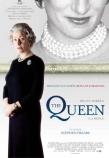
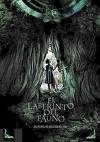
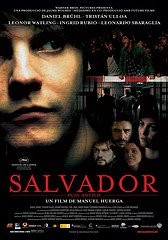
Also doing well last night was one of my favourite films from last year, El Laberinto del Fauno (Pan's Labyrinth), directed by Guillermo del Toro. Another favourite of mine, Salvador, took the best adapted screenplay prize. Meanwhile, Ken Loach lost out to Stephen Frears for the prize for the best non-Spanish European film, The Queen. The distribution of awards highlights that last year was not a particularly strong year for Spanish cinema, most of the prizes went to two of the films and Del Toro is a Mexican director; even though his film was made in Spain and had a strong Spanish cast. In a good year 5 or 6 strong films can be competing for recognition, although I do not remember 2005 being much better.

I'm not a big fan of awards ceremonies, and I don't care who wins an Oscar; the Goya ceremony won some respect from me in 2003 when many of the actors involved transformed it into a protest against Spanish involvement in Iraq. Their action gave a significant boost to the anti-war campaign and at least for one year the self-regarding, introspective nature of these events took a backstage role.

Thursday, November 30, 2006

Cinema....La Reina (The Queen)

I went to see The Queen last Sunday. Don’t get me wrong, I’m proud to be a republican but you have to be able to say or write a phrase like this at least once in your life. So there is my excuse for posting about a British film, that and the fact that I am off to inspect the homeland this weekend. The story told by this film, directed by Stephen Frears, is familiar to anyone who can recall the events following the death of Princess Diana in 1997. It is an account of a royal family resolutely determined to ignore the death of someone who was no longer considered a part of that family, and hiding behind a façade of protocol as they continued their summer holiday in Balmoral. Meanwhile, a newly elected government led by Tony Blair demonstrated a much keener awareness of events and deft political touch as the still fresh spin doctors quickly moulded the image of “the people’s princess”.

Eventually, the Queen is forced to recognise that something has to give as a “public opinion” spurred on by the press makes it clear that aloofness is not the expected response. The pile of flowers at the entrance to Buckingham Palace gets ever bigger, and the empty flagpole on the palace becomes a symbol of royal indifference. Back in Scotland Prince Philip decides that the best solution for the newly bereaved sons of the late Diana is to take them out to shoot deer.


This is a film that impresses most of all for the strength of its performances. Helen Mirren is excellent as the Queen, and Michael Sheen demonstrates that he has studied the mannerisms of Tony Blair down to the finest detail. He even gets that look of momentary panic that crosses Blair’s face occasionally when somebody responds to him in a way he doesn’t expect to happen. Most of the character acting is very believable, whether or not what they do or say actually corresponds with reality. We have Prince Philip (James Cromwell) showing a customary disdain for detail of any kind as he gets on with his not very busy life, and a typically hand-wringing and agonising Prince Charles (Alex Jennings), who gets surprisingly favourable treatment in the film. The Queen Mother (Sylvia Syms) gets away without being portrayed as the gin soaked Nazi that semi-reliable sources always assured us that she was. For some reason we are missing Princess Anne, not that it makes a great deal of difference to anything.

I liked the film, but if I have a problem with it is that in the end it lets everyone off the hook; we are invited to admire Blair for his political agility in handling the situation (rather than seeing the opportunism that was involved), and the Queen for the dignified way in which she responds to the pressure to change direction. I’m not convinced that the gulf between the “modernising” Blair government and the stuffiness of the royal family is actually as great as is shown here, any more than I believe that Blair was ever particularly sceptical about royalty. There is one great moment in the film when Mirren’s Queen reminds Blair that what has happened to her could also happen to him; I have always believed that much of his initial self-confidence over taking Britain into the Iraq war comes from that moment when he believed he was speaking for the people about the death of Diana. The belief that he could convince the public of his case on anything was probably born in September 1997.

It was a curious period, I was already living in Spain at the time and I have to admit, even though I have no liking for him, that I had a few Prince Philip moments as I turned on the TV to see yet another 6 hour special on the life of the person known here as “Laddy Dee”. I never bought the idea that the outpouring of grief for Diana was about the English finding their emotional side, to me it always seemed to be much more a reflection of the cult of celebrity. Before Diana died she was a figure of fun for so many, those carefully arranged interviews on television and the awful stunt of turning up in the middle of someone’s heart operation for the photo.

A few months after Diana’s death, I was working for a while in Jakarta. One evening, as I relaxed with what was almost certainly a well deserved beer, a group of Indonesian students selected me for a bit of English practice. After chatting for a while, the leader of the group (who was virtually the only one saying anything in English) said something along the lines of “Mr Graeme, I want you to know that when our class heard about the death of Princess Diana we all cried”. These were not school kids, they were of university age and they live on the other side of the planet. I didn’t know what to say, my immediate temptation was to reply “Why?”, but keeping things polite I think I just opted for a bland “Oh, did you?” and then changed the subject to something else. Still, the film is definitely worth seeing, I’m not aware of anything remotely similar about the Spanish royal family.

Wednesday, November 08, 2006

Cinema....El Laberinto del Fauno

The latest film by Mexican director Guillermo del Toro, El Laberinto del Fauno (in English - Pan’s Labyrinth) is an extraordinary mixture of fantasy combined with a dramatic story about the aftermath of the Spanish Civil War. Set in the year 1944, the film tells the story of Ofelia (played by Ivana Baquero), a young girl who travels together with her pregnant mother (Ariadna Gil) to a remote mill in the Spanish countryside. From this mill, her stepfather Captain Vidal (Sergi López), is leading a company of government soldiers in the battle against anti-Franco guerrillas hiding out in the nearby mountains. The sadistic Vidal has no interest in his stepdaughter, and only shows concern for the unborn son that his wife is carrying.


One night, close to the mill, Ofelia discovers a ruined labyrinth and inside this labyrinth she encounters a faun (played by Doug Jones), who reveals to her that she is really a princess whose return to her magical kingdom is eagerly awaited. To return to the world from which she came, she must pass three tests before the full moon. The story of how Ofelia tackles these tests provides the structure for the fantasy part of the film, and the most imaginative scenes of the film.

Meanwhile back in the real world, the mill is run by the servant Mercedes (Maribel Verdú), apparently loyal in following the orders of Vidal; whilst secretly doing everything that she can to help the rebels. The local doctor (played by Alex Angulo) also plays a dual role, taking care of Ofelia's mother and at the same time making a risky trip into the mountains to tend injured guerrilla fighters

What might otherwise have been a satisfactory, if slightly predictable, story about the continuing anti-Franco struggle after the Civil War, becomes a different film altogether with the imaginative interweaving of fantasy and oppressive reality. Somehow, del Toro manages to ensure that the two stories in the film are not separate from each other, they interconnect with each other at different points throughout the film. Bizarre though it might seem, the resulting film is strangely effective. This film did not really attract my attention when it first came out, but having seen it I have no hesitation at all in recommending it.

Tuesday, October 17, 2006

Cinema....Salvador

This week’s film has been Salvador, based on a true story about Salvador Puig Antich, an anti-Franco militant executed at the age of 25 after being accused of murdering a police officer during an operation to arrest him. Puig Antich joined a small anarchist organisation, the MIL (The Iberian Liberation Movement), and participated in several bank robberies, the proceeds of which were intended to help those involved in the struggle against the regime. Not surprisingly they attracted the attention of Franco’s ample security apparatus and the crackdown gradually took most members of the group out of circulation, Puig Antich being arrested as a result of a trap set by the police after forcing another arrested member of the MIL to collaborate.


In the end the film concentrates much more on the time he spent in prison awaiting execution, than on his life up the point of his arrest. The tension of the process of fruitless appeals against the death sentence is well portrayed, as is the claustrophobic atmosphere of the prison. The killing by ETA of Prime Minister Carrero Blanco makes any hope of a lighter sentence virtually disappear as the regime seeks revenge. In this film there is no mystery or anything to give away about the ending, the execution is carried out by the garrotte, a glorious example of medieval engineering which was still being put to use in 1974.

The main character in the this film, directed by Manuel Huerga, is played by Daniel Brühl – well known for his role in the film Goodbye Lenin. Brühl has a family connection to Spain, and he certainly speaks the language well – although much of the dialogue in the film is in Catalan, and I won’t try to judge anyone’s accent in that language. The film also features several actors who are well known to those familiar with Spanish cinema – Leonor Watling, Ingrid Rubio, Tristán Ulloa and Leonardo Sbaraglia. Ulloa particularly impresses in the role of the lawyer committed to a concept of justice that is never likely to be realised in the context of the dictatorship.

The film has been accused of misrepresenting the reality both of Salvador Puig Antich, and of the struggle against the dictatorship which led to his death. I can see some justification of the criticism, in that the film tells us very little about the political context in which the events took place. Perhaps because of this lack of background, Puig Antich as portrayed in the film comes across more as a bank robber than as a political activist. Despite these reservations, it is still a moving and intense film, well worth the price of admission. Salvador was one of the films unsuccessfully competing with Almodóvar’s Volver to be the Spanish nomination for the foreign language Oscar this year.

Tuesday, October 03, 2006

Cinema....Volver

A strange thing happened when I went to the cinema on Sunday; for the first time in at least 10 years I found myself enjoying a film directed by Pedro Almodóvar. I always had mixed feeling about his films, but I think it was the day I saw Carne Tremula that things really took a turn for the worse. Normally I like to give every film a chance, and you can't do that without enduring at least 45 to 60 minutes; in the case of Carne Tremula I think I broke that rule, it's a truly awful film.

Since then, I haven't seen anything by Almodóvar that is so bad, but at the same time I was irritated by the acclaim for Todo Sobre Mi Madre and Hable Con Ella. Not that either film was badly made, far from it. It was mostly the use of tragic themes which, to me at least, require a certain seriousness of treatment (such as the rape of a hospital patient in a coma), but which ended up just being the backdrop for a collection of exotic characters without ever really attempting to tell much of a story. Also, his sulky behaviour when not receiving the tributes and prizes in his home country that he is used to receiving abroad, helped to accentuate my negative image of his work. I didn't even bother with La Mala Educación, the previous film to Volver, and it has taken me several months - and some persuasion - for me to finally get round to his latest work.

This time around, I can say the film was worth it. Volver is partly set in La Mancha, the region that Almodóvar originally comes from. It tells the story of the relationship between two sisters and how they cope with the discovery that the mother they thought had died in a fire is not really dead at all. The film, typically with this director, has enough events taking place to fill a whole series of your average soap opera. It also mixes the modernity of the scenes set in Madrid, with a nostalgic vision of life in the villages of La Mancha, where the wind provokes fires and a higher than average level of madness in the inhabitants. However, the only windmills we see in this territory are the giant electric turbines which are slowly covering an ever great extent of Spanish countryside. I think part of the attraction of Almodóvar internationally is that he presents a vision of Spain which scarcely exists anymore, but which connects to ideas that foreigners have about the country.

The presentation of village life is not the only nostalgic part of the film, several times I was reminded of Spanish films I have seen from the 1960’s – the moment when Penélope Cruz “sings” is like something taken straight from a film made 40 or 50 years ago. Cruz plays Raimunda, the stronger of the two sisters, and she is now seen as old enough to portray the mother of a teenage daughter. The role of her mother is played by Carmen Maura in her first film for a long time with Almodóvar. The male characters in the film are bit parts, and not very attractive bit parts either, the film is really about the women and their struggle for survival. One of the highlights for me was a devastating parody of a reality TV show, one of these that depends on exploiting the suffering of those invited to participate.

The film is Spain’s nomination for the Oscars this year, hardly an unusual situation for this director. Whilst I enjoyed it, I hope it doesn’t win the Oscar for best foreign language film, it’s not such a strong contender that there can’t be a film out there somewhere in the world that does more to deserve the international recognition that comes from winning these prizes